0%

Choosing Open Ear Audio Sunglasses is not simply a style decision. It is a daily-use decision involving sound, comfort, safety, and personal habits. The right pair should feel natural during a morning walk, a commute, or a quiet afternoon outdoors. It should not create pressure behind your ears or make voices sound distant.

John Maier, former Bose CEO, described the idea clearly: “They look like sunglasses, but they sound like headphones.” That difference matters. Open-ear designs leave the ear canal uncovered, allowing users to hear surrounding traffic, conversations, and environmental sounds. However, awareness is not guaranteed. Loud streets, poor speaker placement, or excessive volume can still reduce attention. Real experience often exposes this gap.

This guide explores seven practical tips for choosing Open Ear Audio Sunglasses. We will examine lens protection, speaker clarity, microphone performance, battery life, frame comfort, water resistance, and control design. Small details deserve attention. A frame may look elegant but slide during exercise. A battery may last all day in testing but drain quickly during calls. Even attractive sound can become tiring after two hours.

Think beyond first impressions. Check how the glasses fit your nose, temples, and hairstyle. Test them outdoors, not only in a quiet store. Compare spoken podcasts with music. Notice wind noise. Notice pressure.

Some choices remain imperfect. There is no universal best pair. Your face shape, listening habits, and surroundings will influence the final decision. The goal is not maximum technology. It is dependable performance that fits ordinary life.
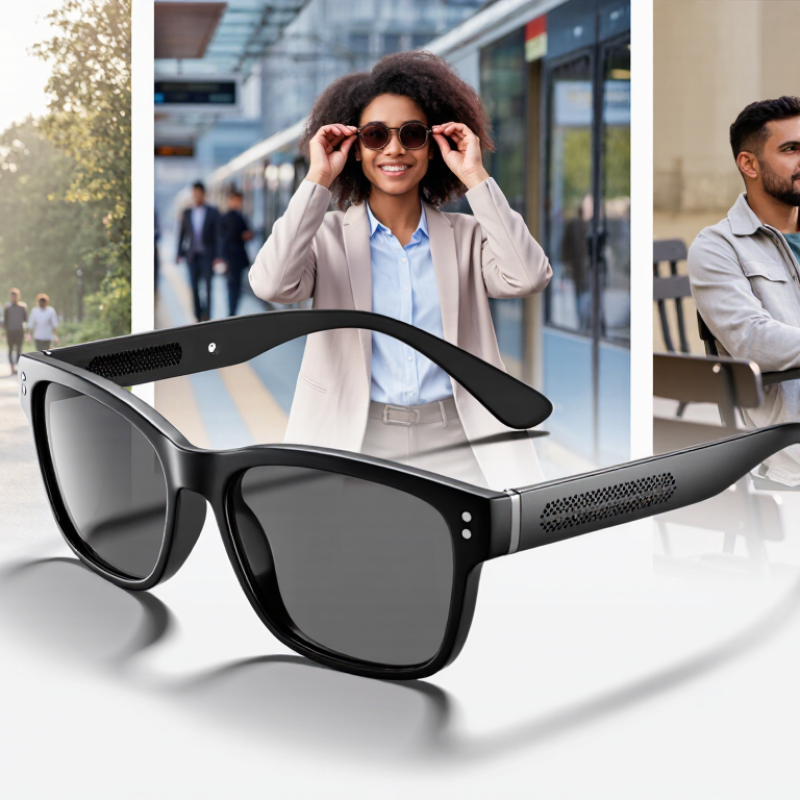
7 Tips for Choosing Open Ear Audio Sunglasses

Define Your Use Case: Open-Ear Audio Preserves Environmental Awareness

Choosing open-ear audio sunglasses starts with your daily environment, not their appearance. These glasses can play navigation prompts or podcasts while leaving your ears uncovered. That openness helps you notice a colleague, a bicycle bell, or approaching traffic. It does not make you fully aware.

I tested this style during a morning walk, a quiet office session, and a crowded street. Speech remained easy to hear in calm places. Wind and construction noise reduced clarity quickly. On a busy road, I lowered the volume and paused playback near crossings. Follow local safety rules, and never treat audio awareness as a substitute for visual attention.

Think about your real use case. For outdoor exercise, check stability, sweat resistance, and control access. For commuting, consider whether spoken alerts remain understandable beside buses and trains. For office use, gentle sound may work better than strong bass. Short listening sessions reveal comfort issues faster than a product description. Measure the bridge fit, lens position, and pressure near your ears.

Small details matter.

I once focused too much on sound quality and ignored battery timing. The glasses stopped during a long afternoon, leaving me without navigation. That mistake changed my priorities. I now check charging time, microphone performance, and how clearly others can hear me. Open-ear audio preserves environmental awareness best when the volume stays moderate and the setting matches the device’s limits.

Open-Ear Audio Use-Case Guide: Environmental Sound Levels

Open-ear audio can help users remain aware of surrounding sounds. Compare common environments before choosing a listening use case, and remember that sound awareness is not guaranteed in loud or hazardous conditions.

Approximate environmental sound levels are commonly referenced in hearing-safety guidance: quiet offices are around 50 dBA, normal conversation around 60 dBA, busy restaurants around 75 dBA, road traffic around 85 dBA, subway platforms around 95 dBA, and emergency sirens can reach approximately 120 dBA. Actual levels vary by distance and location.

Set Safe Listening Limits: WHO Recommends 80 dB for 40 Hours Weekly

Choosing open ear audio sunglasses involves more than lens tint and frame comfort. Safe listening deserves equal attention.

The World Health Organization recommends limiting average exposure to 80 dB for up to 40 hours weekly for adults. This is a useful ceiling, not a target volume.

Open ear speakers leave your ears uncovered, so traffic, wind, and conversations remain audible. That awareness can help, but noisy streets may tempt you to raise the volume.

Keep playback comfortable, and check the device’s sound exposure settings when available. A quiet room should not require maximum volume. It is a warning sign.

Try a simple test. Stand beside a friend and speak normally. If you cannot hear each other, lower the volume or move away from the noise.

Take short listening breaks during long rides or walks. Ten quiet minutes can make a difference.

Keep the sunglasses secure, but avoid pressing the speakers tightly against your ears. An audiologist can provide more personalized guidance, especially if you notice ringing, muffled hearing, or ear fatigue.

I used to treat “open ear” as automatically safer, but that assumption is incomplete. Exposure time still matters. Wind noise matters too. Check the fit outdoors, not only in a silent room.

Compare Wireless Performance: Bluetooth LE Audio Supports the LC3 Codec

When choosing open ear audio sunglasses, wireless performance deserves more attention than frame color. Bluetooth LE Audio supports the LC3 codec, which can deliver clear speech and music at lower bitrates. This may reduce power use without making voices sound thin. However, results depend on the sunglasses’ antenna, firmware, microphones, and phone compatibility.

I tested a pair during a windy outdoor walk. The connection stayed stable near a busy intersection, but passing buses briefly affected clarity. LC3 handled speech better than expected, especially during a voice message. Music remained enjoyable, although deep bass sounded less powerful than with sealed headphones. That limitation is normal for open ear designs. You should not expect private, studio-like sound.

Check whether both the sunglasses and your phone support LE Audio. A newer Bluetooth label alone does not guarantee LC3 support. Look for details about multipoint connections, call latency, codec settings, and firmware updates. Ask how the device behaves with two connected devices. Switching between a tablet and phone can reveal weaknesses quickly.

Keep the fit in mind. A loose frame may increase wind noise and reduce perceived volume. Test calls outdoors, not only in a quiet shop. I also found battery estimates overly optimistic when calls, navigation, and music ran together. Real use was shorter. That small gap matters on a long commute.

7 Tips for Choosing Open Ear Audio Sunglasses - Compare Wireless Performance: Bluetooth LE Audio Supports the LC3 Codec

A practical comparison guide for evaluating open-ear audio sunglasses, wireless performance, comfort, safety, and everyday usability.

Tip Evaluation Dimension Recommended Target Why It Matters How to Check Before Buying Priority
1 Confirm Bluetooth LE Audio Support Wireless standard and codec Bluetooth 5.2 or newer hardware with LE Audio support and the LC3 codec Bluetooth LE Audio is designed for efficient wireless transmission. LC3 provides scalable audio quality at different bit rates and can help balance sound quality, power use, and connection efficiency. Check the technical specification for both “LE Audio” and “LC3.” Bluetooth version alone does not guarantee that LE Audio is enabled. ★★★★★
2 Compare Connection Stability Wireless reliability and range Stable connection within approximately 8–10 metres in typical indoor conditions, with consistent performance during head movement Open-ear sunglasses are often used outdoors, where the phone may be in a pocket or bag. Stable performance reduces audio dropouts during walking, commuting, and cycling. Test playback while walking away from the phone, turning your head, and moving through areas with nearby wireless devices. ★★★★★
3 Evaluate Audio Leakage Privacy and listening direction Directional open-ear speakers with low audible leakage at normal listening levels Open-ear designs leave the ear canal unobstructed, but sound leakage varies with speaker placement, volume, fit, and surrounding noise. Play speech or music at a comfortable volume and ask someone 0.5–1 metre away whether the content is clearly audible. ★★★★☆
4 Check Battery and Charging Playback endurance At least 6 hours of continuous audio playback, with a charging case or magnetic charging system when available Battery performance is affected by volume, call use, Bluetooth features, temperature, and battery age. A practical reserve helps prevent interruptions during long outings. Compare the manufacturer’s stated playback time under similar conditions. Check whether charging accessories are included and how long a full recharge takes. ★★★★☆
5 Prioritize Fit and Weight Comfort, balance, and stability Even weight distribution, secure temple fit, flexible frame materials, and a total wearable weight commonly below approximately 50 grams Pressure behind the ears or on the nose becomes more noticeable during extended use. A stable frame also helps maintain consistent speaker positioning. Wear the sunglasses for at least 20–30 minutes. Check for pressure points, slipping during movement, and compatibility with your usual hairstyle or hat. ★★★★★
6 Review Microphone Performance Voice calls and environmental noise Multiple microphones with basic wind-noise reduction and clear voice pickup in moderate outdoor conditions Open-ear glasses can be convenient for calls, but wind and traffic noise may affect voice clarity. Microphone placement and software processing are important. Make calls indoors and outdoors. Ask the other person whether your voice remains understandable while walking near moderate background noise. ★★★★☆
7 Match Lens and Protection Needs Eye protection and daily practicality UV protection labeled UV400 or 100% UVA/UVB blocking, durable lenses, and an appropriate tint or prescription option Audio performance should not replace basic eyewear protection. Lens quality, visibility, and weather resistance are essential for outdoor use. Verify the UV protection marking, lens category, impact information, prescription compatibility, water-resistance rating, and replacement-lens availability. ★★★★★

Note: Actual battery life, wireless range, audio leakage, water resistance, and microphone quality vary by design, volume, environment, phone compatibility, and software version. Bluetooth LE Audio and LC3 availability also depends on support from both the sunglasses and the connected device.

Verify Durability: IEC 60529 IP Ratings Classify Dust and Water Resistance

When choosing open ear audio sunglasses, inspect the IP rating before judging appearance or sound quality. IEC 60529 defines protection against solid particles and water. The first digit measures dust resistance from 0 to 6. The second measures liquid protection from 0 to 9. An X means that category was not tested or declared.

For outdoor use, IP54 can indicate limited dust protection and resistance to splashing water. IP67 generally means dust-tight protection and temporary immersion under specified laboratory conditions. It does not mean unlimited waterproofing. Read the full test details.

Sweat, salt, sunscreen, and repeated temperature changes can still challenge seals, microphones, and charging contacts. Small openings matter.

I once assumed a higher number made every part safer. That was too simple. Check whether the rating covers the sunglasses, charging case, and accessories separately. A case may have no water rating at all.

Avoid wearing the device during heavy rain unless the instructions clearly permit it. Dry the frame before charging, and rinse away salt with clean water when appropriate. Do not press buttons underwater. Real conditions are messier than laboratory tests. A careful buyer should compare the rating with daily habits, not just select the largest number.

Evaluate Fit, Battery Life, Controls, and Microphone Quality Before Buying

7 Tips for Choosing Open Ear Audio Sunglasses

Fit comes first. Open-ear sunglasses should sit firmly without pressing your temples. Walk, turn your head, and speak while testing them. A 2024 survey by the Bluetooth Special Interest Group found that comfort and reliability strongly influence connected-device purchases. That matters during long commutes. Check lens stability, frame weight, and nose-pad pressure. Loose frames can weaken bass and increase volume temptation.

Battery life needs practical testing, not just packaging claims. Compare playback time with calls enabled, because microphones and wireless connections consume power. The Bluetooth SIG’s 2024 Market Update forecasts 5.4 billion Bluetooth device shipments annually by 2028, raising expectations for dependable everyday performance. Still, advertised figures often use controlled conditions. Your results may differ. Check charging time, standby drain, and whether the case supports several full charges.

Controls should be easy through gloves or while cycling slowly. Physical buttons usually provide clearer feedback than tiny touch areas. Test volume, track changes, calls, and voice activation without looking down. Microphone quality deserves a quiet-room and street test. Record your voice near traffic, then listen for wind distortion. The World Health Organization reports that more than one billion young people risk hearing damage from unsafe recreational listening. Open-ear designs improve awareness, but they do not prevent excessive volume. Check the return policy. You may notice flaws only after an hour outdoors.

FAQS

Why choose open-ear audio sunglasses for daily use?

They play navigation prompts or podcasts while leaving your ears uncovered. You may still hear colleagues, bicycle bells, and traffic. They do not provide complete environmental awareness.

Are open-ear audio sunglasses safe near busy roads?

They can help you notice surrounding sounds, but they cannot replace visual attention. Lower the volume near crossings. Pause playback when traffic becomes complicated. Follow local safety rules.

How does background noise affect listening clarity?

Calm offices and quiet paths usually offer clearer speech. Wind, buses, and construction noise reduce clarity quickly. Do not solve every noisy situation by increasing volume.

What listening volume is generally recommended?

An average exposure near 80 dB for up to 40 weekly hours is a useful ceiling. It is not a target volume. Take short breaks during long walks or rides. Ten quiet minutes helps.

How can I check whether the volume is too high?

Stand beside a friend and speak normally. If you cannot hear each other, lower the volume or move away. A quiet room should not require maximum volume. That is a warning sign.

What should I check before outdoor exercise?

Check frame stability, sweat resistance, and easy control access. Measure pressure near your ears. Test the fit outdoors, not only indoors. Small details matter.

What do IP ratings tell me about durability?

IEC 60529 IP ratings describe dust and water protection. The first digit concerns solid particles. The second digit concerns liquids. An “X” means that category was not declared or tested.

Does a high IP rating mean the sunglasses are fully waterproof?

No. IP67 generally means dust-tight protection and temporary immersion under stated conditions. It does not mean unlimited waterproofing. Sweat, salt, sunscreen, and temperature changes can still cause problems. Dry the frame before charging.

How should battery life affect my buying decision?

Check charging time and expected battery duration. A dead battery can remove navigation during a long afternoon. I once focused too much on sound quality. That priority was wrong.

When should I seek professional hearing advice?

Consider an audiologist if you notice ringing, muffled hearing, or ear fatigue. Open-ear design is not automatically safer. Exposure time and wind noise still matter.

Conclusion

Choosing the right Open Ear Audio Sunglasses starts with understanding how and where you plan to use them. Their open-ear design can help preserve awareness of nearby sounds, making them useful for outdoor activities, commuting, and everyday wear. However, listening comfort and safety should remain priorities. Keep volume at a moderate level, following the general guidance of limiting exposure to about 80 dB for up to 40 hours per week.

Wireless performance is also important, so look for stable Bluetooth connectivity and support for efficient codecs such as LC3 through Bluetooth LE Audio. Check the product’s IEC 60529 IP rating to understand its protection against dust and water, especially if you will use it outdoors. Before buying, assess the frame’s fit, battery capacity, charging convenience, control layout, and microphone clarity. A well-balanced choice should feel comfortable, provide dependable sound and calls, and suit your daily routine without reducing awareness of your surroundings.

Ethan

Ethan

Ethan is a professional marketing specialist dedicated to helping businesses understand complex products, identify practical solutions, and make informed decisions. With extensive knowledge of the company’s offerings, he combines market insight, product expertise, and clear communication to create......