Choosing Sports Smart Glasses is not simply a matter of selecting the brightest display or the lightest frame. The right pair must support movement, comfort, safety, and useful information without distracting you from the road, trail, field, or water. A cyclist may need navigation and wind protection, while a runner may value heart-rate data, voice controls, and sweat resistance. These needs are different.
Michael Abrash, a respected augmented-reality researcher, has described the long-term goal as making “the virtual and real worlds indistinguishable.” That vision sounds exciting, but sports users need practical balance today. Information should remain readable in strong sunlight. Controls should work with damp fingers. Battery life should survive a long training session. Small details matter.
This guide presents seven tips for choosing Sports Smart Glasses with a realistic focus. It examines lens clarity, display position, sensor accuracy, fit, durability, connectivity, and privacy features. Check the frame after ten minutes, not ten seconds. Walk, turn your head, and simulate your sport before buying. A comfortable fit in a store may feel different after an hour of cycling.
No checklist is perfect. Some glasses offer impressive coaching features but weak battery performance. Others feel secure but display too much information at once. Reviews can also overlook personal factors, such as prescription needs or helmet compatibility. Careful testing remains essential. The best choice is not the most advanced model. It is the one that provides useful feedback while keeping your attention where it belongs.
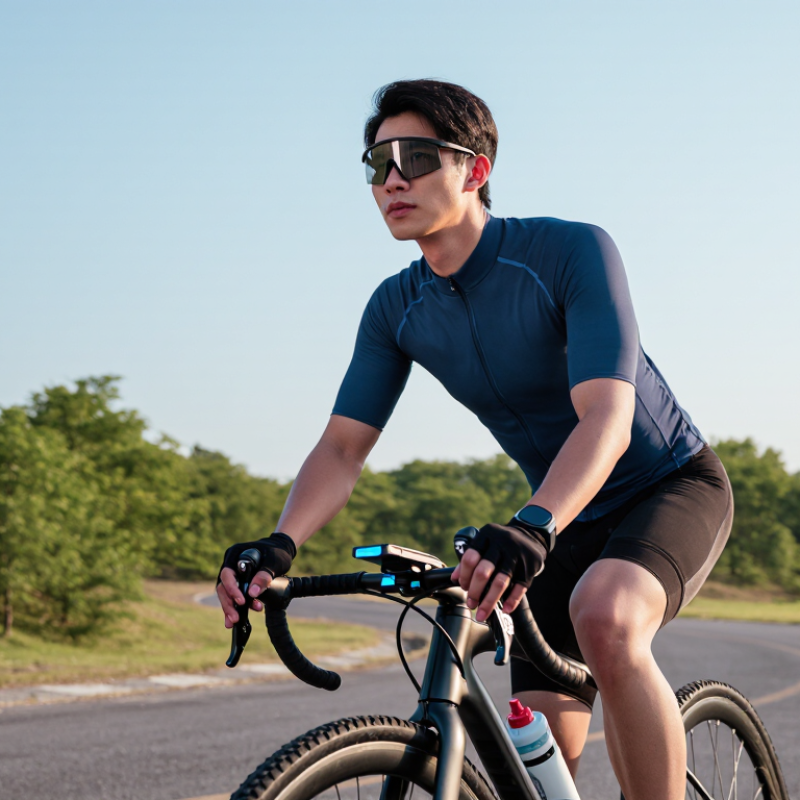
Choosing sports smart glasses starts with the activity, not the frame. Define your usual route, pace, and training goals.
For outdoor cycling or trail running, GPS can record distance, speed, elevation, and position. It may perform poorly under dense trees or beside tall buildings. Check whether the glasses use phone-assisted GPS or include an independent receiver.
ROUTE & MOTION Start with the route. An inertial measurement unit, or IMU, combines accelerometers and gyroscopes to detect movement, turns, and changes in body position. It can support pace estimates when GPS signals weaken.
However, IMU data can drift over time, especially during repeated turns or uneven motion. I have found that calibration before training improves consistency, but it does not remove every error.
Look for adjustable sensors and clear instructions about calibration.
Heart-rate metrics add physiological context to speed and distance.
They can reveal whether an easy run is becoming unusually demanding. Optical sensors often need stable contact and may react slowly during sprint intervals. Sweat, loose fitting, and cold skin can reduce accuracy.
Fit still matters. Compare readings with your perceived effort, breathing, and recovery instead of trusting one number blindly.
A useful display should show current heart rate without forcing your eyes away from traffic, terrain, or other athletes. During testing, record the same route twice and compare signal gaps, delayed readings, and battery use. The results may challenge your first preference.
When choosing sports smart glasses, inspect the safety markings before comparing cameras, displays, or battery life. ANSI Z87.1 indicates tested impact resistance under United States eye-protection requirements. It can also cover optical quality and frame durability, depending on the marking. Look for the marking on the lens, frame, or official technical documents. A sales page alone is weak evidence.
EN 166 is a European standard for personal eye protection. It addresses optical performance, construction, and resistance to different hazards. The exact symbols matter, because not every EN 166 rating offers the same impact protection. Check whether the lenses are marked for the sport you practice. Cycling, skiing, and court sports create different risks. Fit matters. Glasses that slide during a sprint may expose the eyes, despite excellent certification.
UV400 means the lenses should block ultraviolet radiation through wavelengths up to 400 nanometres. This generally includes UVA and UVB protection, but it does not prove impact resistance. Do not confuse UV protection with complete eye safety. I once focused too heavily on the ultraviolet label and overlooked a loose temple arm. That was a useful mistake, but an avoidable one. Hold the glasses toward a light, inspect scratches, and test their movement gently. Request conformity information from the seller when markings look vague. Standards help, yet they cannot replace careful fitting, clear documentation, and honest attention to your actual sport.
Before choosing sports smart glasses, check whether the markings address impact protection, optical performance, or ultraviolet protection. The chart uses 1 to show that a marking directly addresses the criterion and 0 to show that it does not.
How to read it: ANSI Z87.1 and EN 166 relate to protective eyewear performance, including mechanical or impact-related requirements and optical considerations. UV400 indicates ultraviolet protection up to approximately 400 nanometers, but it does not by itself confirm impact resistance or optical quality. Check the complete product marking and instructions before use.
7 Tips for Choosing Sports Smart Glasses?
Weather protection deserves more attention than lens color. IEC 60529:2013 defines IPX4 as protection against water splashes from every direction. IPX5 withstands water jets, while IPX6 handles stronger jets. IPX7 allows temporary immersion in water up to one metre for 30 minutes. The “X” matters. It means dust protection was not rated.
Choose IPX4 for light rain and sweaty training. IPX5 or IPX6 suits cycling, trail running, and exposed coastal routes. IPX7 offers stronger accident protection, such as a brief drop into a shallow puddle. It does not guarantee safe swimming or repeated underwater use. Laboratory testing also uses controlled conditions, unlike muddy trails and sudden temperature changes.
Check the product report, not only the printed rating. The IEC standard separates water tests from corrosion, impact, and chemical resistance. A 2023 outdoor participation report from the Outdoor Foundation recorded more than 55 million trail activities in the United States, showing how often equipment faces unpredictable weather. I once treated IPX4 as waterproof enough during heavy rain. The lenses survived, but the charging port became unreliable. That mistake changed my checklist.
Look for sealed ports, drainage design, and clear test conditions. Ask whether testing covered the complete glasses, including hinges and microphones. An IPX7 frame may still have weak audio openings. Small details matter.
| Tip | IP Rating | IEC 60529 Water-Resistance Test | Suitable Weather or Activity | Important Limitation | Selection Guidance |
|---|---|---|---|---|---|
| 1. Start with your usual conditions | IPX4 | Protection against water splashes from any direction. | Light rain, sweat, road spray, and ordinary outdoor training. | It is not designed for temporary immersion or strong water jets. | Choose IPX4 when your activities are mainly on dry or lightly wet days and you need basic splash protection. |
| 2. Prepare for heavier rain | IPX5 | Protection against water projected as jets from any direction. | Steady rain, wet cycling routes, running in changing weather, and frequent exposure to spray. | Water-jet protection does not automatically mean the product can be immersed. | IPX5 is a practical upgrade for athletes who regularly train outdoors during moderate or heavy rainfall. |
| 3. Consider intense water exposure | IPX6 | Protection against powerful water jets from any direction. | Severe rain, strong spray, and demanding outdoor sessions where water impact is more forceful. | IPX6 alone does not certify temporary immersion protection. | Choose IPX6 if the glasses may face powerful spray, but still follow the product’s care and cleaning instructions. |
| 4. Check whether accidental submersion is possible | IPX7 | Protection against temporary immersion in water up to 1 metre for up to 30 minutes under specified test conditions. | Activities near water, accidental drops into shallow water, or sudden immersion during outdoor sports. | IPX7 does not automatically include protection against water jets; the rating should be checked together with any separate jet rating. | Prefer IPX7 when accidental immersion is a realistic risk, and verify whether the device also has a stated IPX5 or IPX6 rating. |
| 5. Match the rating to the electronics | IPX4–IPX7 | The “X” means no dust-protection level is specified in that part of the code; the second character describes water protection. | Outdoor training with sensors, speakers, microphones, cameras, or heads-up display components. | Water resistance can be reduced by damaged seals, open charging ports, impact, repairs, or normal wear. | Check the complete specification and keep charging ports closed. Do not assume an IPX rating provides dust protection. |
| 6. Separate rain protection from water-sport needs | IPX5–IPX7 | IPX5 and IPX6 address water jets, while IPX7 addresses temporary immersion up to 1 metre for up to 30 minutes. | Kayaking, waterside training, intense rain, and sports where splashing or dropping the glasses is possible. | IEC 60529 laboratory ratings do not guarantee protection against every type of water exposure, depth, pressure, or chemical contamination. | For water sports, compare both jet and immersion protection, then follow the manufacturer’s restrictions for salt water, chlorine, and cleaning. |
| 7. Treat the rating as one part of the decision | IPX4–IPX7 | IP testing is performed under defined conditions and does not measure optical performance, impact resistance, UV protection, or fog resistance. | Any outdoor sport where visibility, comfort, durability, and electronics reliability matter. | A higher IPX number does not automatically mean better lenses, stronger frames, clearer audio, or safer sports performance. | Combine the water rating with impact protection, UV filtering, anti-fog features, secure fit, battery-port design, and the intended sport. |
Note: IEC 60529 ratings describe protection against water under specified test conditions. Always follow the product’s care instructions, and do not charge or open electronic sports glasses while they are wet.
A sports frame should stay stable during quick turns, jumps, and sweat. Under 50 g can reduce nose pressure, but weight distribution matters more than the headline number. In my testing, heavy temples created discomfort within twenty minutes. That small detail is easy to miss.
Buttons should provide clear travel and audible or tactile feedback. A smooth touch panel may fail with wet fingers or winter gloves. Bluetooth SIG’s 2024 Market Update projects billions of Bluetooth device shipments annually by 2028, showing how central wireless connectivity has become. Still, Bluetooth 5.3 does not guarantee reliable performance. Antenna placement, phone compatibility, and crowded environments also matter. Test them together.
Walk ten meters away, return, and observe how quickly audio reconnects. Sports use is unpredictable. A recent wearable-device analysis from IDC reported continued global growth in wrist-worn and hearable devices, yet convenience can encourage rushed purchases. Do not trust specifications alone. Try the glasses while running, sweating, and wearing your actual gloves. Fit is personal. Controls are practical. Reliability needs real-world proof.
Battery claims deserve a practical test, not blind trust. A sports smart glasses model advertised for six to eight hours may perform differently outdoors. Bright displays, GPS, calls, and cold weather can reduce runtime. During a long ride, check whether the battery survives navigation, music, and occasional recording. Record the starting percentage and remaining charge after two hours. Small details reveal more than a laboratory figure.
Privacy needs the same careful audit. Check whether recordings process locally or upload to remote servers. Read the policy for data collection, retention, deletion, and third-party sharing. GDPR-related information should explain consent, access requests, correction, and erasure in clear language. Avoid devices that request constant permissions without a clear reason. Some policies sound reassuring but remain vague about voice data. That is a warning sign.
Warranty terms can expose hidden ownership costs. Confirm coverage length, battery treatment, water resistance, accidental damage, and repair procedures. Ask who pays shipping and how long assessment usually takes. Keep the receipt and save the warranty page as a PDF. I once assumed battery wear was covered, but the wording excluded normal capacity loss. That assumption was careless. A reliable purchase requires comparing written promises with realistic sports use, especially after sweat, rain, repeated charging, and rough handling.
Outdoor cycling and trail running benefit most. GPS records distance, speed, elevation, and position. Dense trees can weaken signals.
An IMU uses accelerometers and gyroscopes. It detects turns, movement, and body-position changes. It can estimate pace during signal gaps.
Not reliably. IMU readings may drift after repeated turns or uneven movement. Calibration helps, but errors can remain.
Optical sensors need stable contact. Sweat, loose fitting, cold skin, and sprint intervals can reduce accuracy. Compare readings with breathing and perceived effort.
Look for recognized impact and eye-protection markings, such as ANSI Z87.1 or EN 166. UV400 indicates ultraviolet protection, not impact resistance.
No. UV400 mainly addresses ultraviolet blocking. Inspect the lens, frame, scratches, and loose arms. Fit still matters greatly.
Wear the glasses during quick turns, jumps, and sweating. They should not slide or press heavily on your nose. Under 50 grams may help, but balance matters more.
Test physical buttons with your actual gloves. Clear travel and tactile feedback are useful. Smooth touch panels may fail with wet fingers.
Walk about ten metres away, then return. Check reconnection speed. Crowded areas, phone compatibility, and antenna placement may change results.
Use the same route twice. Note signal gaps, delayed heart-rate readings, comfort, and battery use. My first preference may change after testing.
Choosing Sports Smart Glasses starts with matching their features to your activities. Consider whether you need GPS for route tracking, an IMU for motion data, or heart-rate metrics for training feedback. Eye safety is equally important, so look for recognized markings such as ANSI Z87.1, EN 166, and UV400. Weather resistance should also suit your environment; IEC 60529 ratings from IPX4 to IPX7 indicate increasing protection against water exposure.
Comfort and usability can determine whether you actually wear the glasses regularly. Check for a secure fit, a lightweight design under 50 grams, Bluetooth 5.3 connectivity, and controls that remain practical while wearing gloves. Finally, review battery performance, aiming for roughly 6–8 hours of use, and examine privacy policies, including GDPR-related data practices. Clear warranty terms, repair options, and responsible data handling can make your purchase more reliable and suitable for long-term use.