Choosing the best Color Changing Sunglasses requires more than comparing lens colors or frame styles. It involves light exposure, driving habits, visual comfort, and optical performance.
Grand View Research reported that the global sunglasses market reached approximately USD 20.6 billion in 2022. Its forecast also indicates continued growth through 2030. Mordor Intelligence identifies photochromic lenses as a growing segment, supported by demand for convenient vision protection. These figures suggest strong consumer interest. They do not prove that every adaptive lens performs equally well.
Dr. Gary Heiting, OD, an optometrist and optical-care writer, explains the basic function clearly: “Photochromic lenses darken automatically when exposed to sunlight.” That convenience sounds simple. In practice, ultraviolet exposure, temperature, lens material, and windshield filtering can change the result. Some lenses become noticeably darker outdoors but remain lighter inside a vehicle. Others transition quickly but may not provide the darkest shade available from dedicated sunglasses.
A reliable choice begins with real use. Consider commuting at noon, walking beneath trees, or moving between a bright street and a dim café. Check the lens category, UV protection, transition speed, coating durability, and return policy. Independent testing matters more than attractive packaging.
There is no perfect pair for everyone. That is worth admitting. A product described as “best” may still feel too slow, too pale, or too dark for your routine. This guide compares the practical details behind Color Changing Sunglasses, helping readers judge performance with clearer expectations.
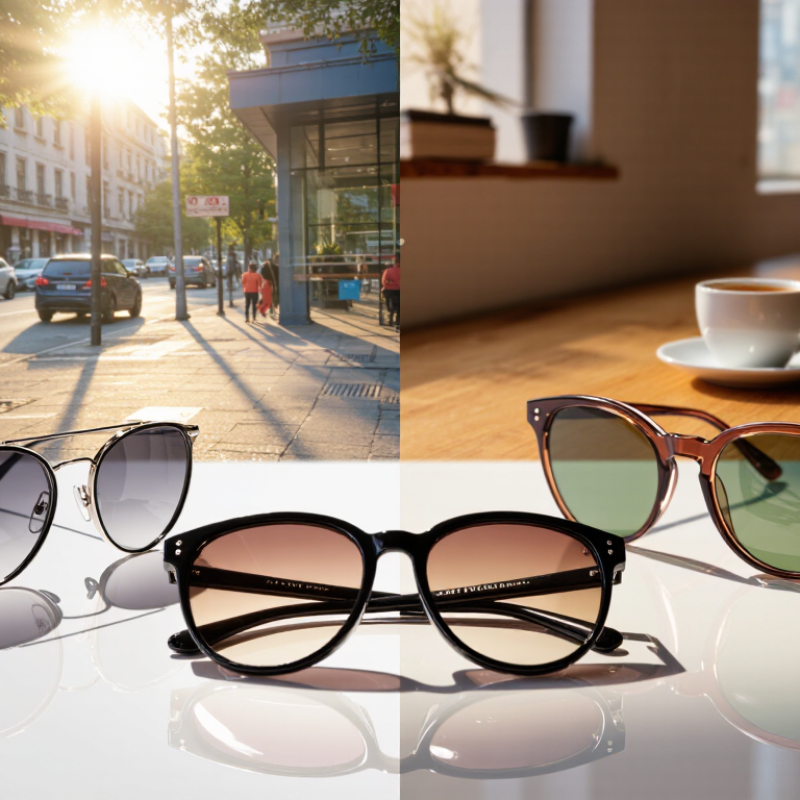
Color-changing sunglasses use photochromic lenses that react to ultraviolet light. Special molecules inside the lens shift their structure when UV rays reach them. The lenses then darken outdoors and become clearer indoors. The change is automatic. No switch is needed.
Temperature affects this process too. On a cold winter walk, lenses may darken more strongly and stay tinted longer. In hot weather, they can react faster but appear slightly lighter. Most lenses need several minutes to clear completely. The result is not perfectly predictable. I once assumed bright daylight always meant maximum darkness, but cloudy skies can still contain strong UV exposure.
When choosing the best pair, check the lens category, UV protection, and transition speed. A reliable pair should block 100% of UVA and UVB rays, according to the product’s verified test information. Ask whether the lenses work well inside vehicles. Many windshields block much of the UV light that activates photochromic molecules, so the lenses may remain too clear while driving. That detail is easy to miss.
Frame comfort matters during real use. The sunglasses should sit securely without pressing your nose or temples. Look at the lens size, too. Larger lenses can provide better coverage around the eyes. Photochromic lenses are convenient, but they are not perfect for every situation. Their tint may lag behind sudden light changes, especially when entering a dark room or leaving one.
How to Choose the Best Color Changing Sunglasses?
Identifying the Right Lens Type for Your Daily Activities
Choosing color changing sunglasses starts with your routine, not the darkest tint. Photochromic lenses lighten indoors and darken outdoors, making them useful for commuting, shopping, and changing weather. However, they may react slowly in cold conditions. They also often remain lighter inside a car because windshields block much of the ultraviolet light.
For driving, consider lenses designed to reduce glare while maintaining clear contrast. Polarized photochromic lenses can help with reflections from wet roads, glass, and vehicle surfaces. They may make some digital displays harder to read at certain angles. Test them with your phone before buying. Small details matter.
Outdoor workers, cyclists, and hikers may need faster darkening and stronger ultraviolet protection. A wraparound frame can limit side glare and wind exposure. People who move between offices and bright streets may prefer a lighter everyday tint. I once assumed the darkest lens would offer the best comfort. It did not. My eyes felt strained indoors, and the color seemed unnatural.
An optician can check whether the lens suits your prescription, face shape, and visual needs. Ask about ultraviolet protection, impact resistance, activation speed, and performance behind glass. Fit matters, too. Loose frames let bright light enter from the sides. A reliable choice balances activity, environment, and comfort rather than appearance alone.
Compare common lens types by how well they match everyday activities. Higher scores indicate a better practical fit for that activity, based on typical lens behavior rather than brand-specific performance.
Quick guide: Photochromic lenses are convenient for changing light conditions, while polarized lenses are especially useful for reducing reflected glare during daytime driving and outdoor activities. Clear UV-protective lenses are practical for indoor use and evening conditions. For everyday sunglasses, choose lenses labeled to block 99–100% of UVA and UVB radiation.
UV protection should be your first checkpoint, not the lens color.
Look for lenses labeled UV400 or 100% UVA and UVB protection. A darker lens does not automatically block more ultraviolet radiation. During outdoor testing, I check the label, hinge quality, and fit around the cheeks. Small gaps can let bright side light reach your eyes.
Photochromic lenses usually darken outdoors and become clearer indoors. However, temperature affects their speed. Cold weather may slow the change, while a warm car can make lenses react differently. Most windshields filter much ultraviolet light, so these lenses may stay lighter inside a vehicle. I once assumed “color changing” meant instant adjustment. That assumption was wrong.
A smooth transition helps when walking between shade and sunlight. Some lenses reduce glare through polarization, but not every color-changing lens has this feature. Test the glasses near reflective windows, wet pavement, and a bright sidewalk. Check for distortion when looking toward the edges. Clear vision should remain stable while your eyes move. A professional optical fitting can also reveal pressure points behind the ears or uneven lens alignment. Do not ignore discomfort. It often becomes more noticeable after several hours outside.
Choosing color-changing sunglasses starts with the frame, not the lens tint. A well-fitting frame should sit evenly across your nose, without leaving red pressure marks. The temples should touch your head gently, while the lenses cover your eyes and reduce side glare. Move your head quickly. If the frame slides, the fit is wrong. I once chose a lighter frame because it looked elegant, but it shifted during cycling. That was a poor choice.
Lens color affects comfort and visual judgment. Gray usually keeps colors natural and works well for driving or daily use. Brown or amber can increase contrast in cloudy conditions, although the warmer view may feel unusual. Green offers balanced brightness and contrast.
For changing lenses, check both indoor clarity and outdoor darkness. A lens that darkens slowly may disappoint during sudden sunlight. It should also provide full UVA and UVB protection, preferably with compliance information linked to ISO 12312-1.
Reliable eye-health guidance matters more than marketing language. The World Health Organization reports that cataracts cause about 51% of global blindness, and ultraviolet exposure is a recognized risk factor. The National Eye Institute states that more than half of Americans develop cataracts by age 80. These figures do not make every photochromic lens equally effective. Frame coverage, lens quality, and daily wearing habits still matter. Test them carefully. Your eyes notice small mistakes.
Choosing color-changing sunglasses requires more than watching the lenses darken outdoors. Durability matters because hinges, nose pads, and coatings face sweat, dust, and repeated cleaning. The Vision Council’s 2023 consumer research found that roughly four in five U.S. adults wear sunglasses. Frequent use makes frame strength a practical concern. Look for flexible hinges, impact-resistant lenses, and clear care instructions. The lenses should meet recognized requirements, such as ISO 12312-1 for general sunglasses. Marketing language alone is not enough.
Comfort affects whether you actually wear them. A light frame should sit evenly without pressing behind the ears. The bridge must stay stable when you walk, bend, or perspire. Photochromic lenses may darken more slowly in cold weather. They can also remain lighter inside vehicles because windshields filter much ultraviolet light. That is normal, but easily overlooked. The Vision Council’s 2024 consumer findings continue to identify comfort, protection, and appearance as important purchase factors. Check optical clarity in both bright and indoor conditions. Small distortions become tiring during long use.
Overall value combines price, lifespan, performance, and after-sales support. A cheaper pair may cost more if its coating scratches quickly. A warranty covering defects adds measurable value. Keep the case and use a microfiber cloth. I sometimes underestimate cleaning habits. They matter more than expected. Choose verified UV protection, comfortable fitting, and replacement support before paying for dramatic color changes.
Photochromic molecules react when ultraviolet light reaches the lenses. Their structure changes, making the lenses darker outdoors. No switch is needed.
They usually become much clearer indoors, but clearing can take several minutes. The result may vary with temperature and lighting. Not always instant.
Yes. Clouds can still allow strong ultraviolet exposure. Brightness alone does not predict lens darkness, which surprised me at first.
Yes. Cold conditions may produce darker lenses or slower clearing. Warm conditions can create faster changes but sometimes lighter tint. Results are not perfectly predictable.
Often, they may remain too clear inside vehicles. Many windshields block much of the ultraviolet light needed for activation. Check verified vehicle-use information before buying.
Look for verified 100% UVA and UVB protection, or a UV400 label. A darker lens does not automatically provide stronger ultraviolet protection.
No. Some lenses include polarization, but others do not. Test them near wet pavement, reflective windows, and bright sidewalks before deciding.
The frame should sit securely without pressing your nose, temples, or ears. Larger lenses may cover more side light. Small gaps matter.
Yes. Tint changes may lag when entering a dark room or leaving one. Walking between shade and sunlight can expose this weakness. I once expected instant adjustment, and that was wrong.
Choosing the best Color Changing Sunglasses starts with understanding how their lenses respond to changing light conditions. These lenses can darken outdoors and become clearer indoors, helping provide comfortable vision throughout the day. When selecting a pair, consider your daily activities, such as driving, commuting, sports, or casual use, since different lens types may offer varying adaptation speeds and visual performance. Reliable UV protection is essential, while light sensitivity, clarity, and consistency should also be compared carefully.
The frame should match your face comfortably without slipping, pressing, or limiting your field of vision. Lens color can affect visual comfort and style, so choose one that suits your environment and personal preferences. Finally, examine the sunglasses for durable materials, smooth hinges, lightweight construction, and a secure fit. The best overall value comes from combining effective light adaptation, dependable protection, lasting comfort, and quality construction rather than focusing only on appearance or price.