High Wrap Shield Sunglasses are more than a bold silhouette. Their broad, curved lenses can offer extensive coverage, while lightweight frames and secure fit matter during long days outdoors. For global buyers, choosing among shield styles means weighing lens shape, frame materials, optical clarity, comfort, and intended use. A dramatic wrap is not automatically a better one.
Market data helps explain the interest. Grand View Research estimated the global sunglasses market at approximately US$32.9 billion in 2022 and projected continued growth through 2030. That figure covers sunglasses broadly, not shield designs alone, so it should not be read as a category-specific forecast. The World Health Organization also identifies ultraviolet exposure as a concern for eye health; buyers should therefore assess verified UV protection rather than rely on lens darkness or appearance. Details matter.
This guide compares ten High Wrap Shield Sunglasses types for international sourcing and product selection, from sporty single-lens shields to fashion-forward oversized frames. It considers practical details buyers can inspect: lens coverage at the temples, nose-pad contact, frame flexibility, and how securely a model stays in place. As ophthalmologist and eye-health researcher Dr. Susan MacDonald has emphasized in public eye-health guidance, sunglasses should provide UV protection—not merely shade. A caveat: style labels vary between suppliers, and product claims still need verification.
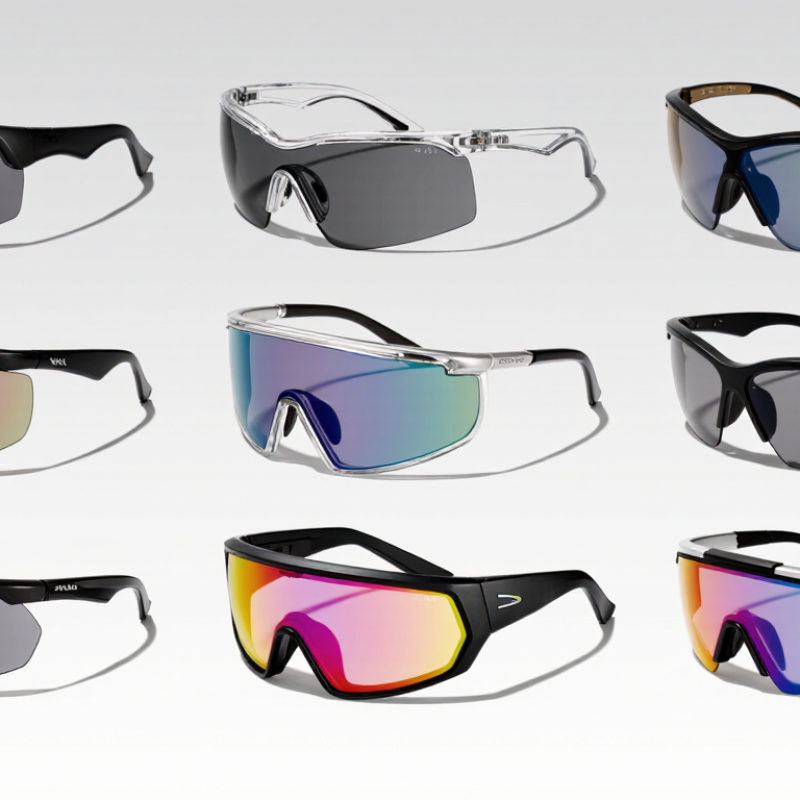
High-wrap shield sunglasses use a wide lens or joined lens panels that curve around the face. Their shape can reduce light entering from the sides, though coverage depends on frame design and fit. The main components are the shield lens, frame or lens supports, nose bridge, and temples. Some designs add adjustable nose pads or flexible temple tips. Coverage matters. A curved lens alone does not confirm UV protection; check the lens specifications.
Fit should feel secure without pinching. When trying a pair, check whether the lens sits close to your cheeks without touching them, and whether the temples press behind your ears. Look left and right, then bend forward gently. The frame should stay in place. Face width, nose shape, and helmet use can change how a model fits. Even experienced buyers can misjudge fit from a product photo; I would not treat appearance as a substitute for a real fitting.
Tips: Check for side gaps in bright outdoor conditions, and confirm the stated UV rating before purchase. If the shield fogs during movement, ventilation and fit may need attention. Small details count. A slightly loose temple can become irritating after an hour.
High-wrap sunglasses vary by lens shape and frame construction. Buyers can compare ten common designs: single-shield, dual-lens wrap, full-frame shield, half-frame shield, rimless wrap, ventilated wrap, prescription-insert, polarized, photochromic, and interchangeable-lens types. Some categories overlap: a shield lens may also be polarized or replaceable. The Grand View Research global sunglasses market report valued the market at USD 38.7 billion in 2022 and projected 6.5% annual growth from 2023 to 2030. That figure covers the wider sunglasses market, not high-wrap styles alone.
For outdoor use, lens coverage matters, but fit matters too. Check that the frame sits close to the temples without touching the cheeks, and that airflow does not leave lenses fogged after a climb or cycle. Ventilated frames can help. Interchangeable lenses suit changing light, while photochromic lenses adjust as light shifts; neither design removes the need to verify UVA and UVB filtration. Polarization reduces reflected glare, but it may make some digital displays harder to read. A prescription insert offers a practical option for corrective wear, though it can add weight and narrow the usable field of view. Wrap is not a magic seal. Ask for documented lens specifications and inspect optical clarity before comparing price. Some buyers still overlook side coverage.
| No. | High-Wrap Type | Typical Lens Configuration | Typical Frame Material | Coverage & Protection | Ventilation | Common Buyer Applications | Main Advantages | Key Considerations |
|---|---|---|---|---|---|---|---|---|
| 1 | Single-Shield Wrap | One continuous curved lens | TR-90 nylon or lightweight polycarbonate frame | High side coverage; often available with UV400-rated lenses | Small top or side vents may be included | Cycling, running, hiking, outdoor work | Wide field of view, low lens gap, aerodynamic profile | Large curved lenses require careful optical quality control |
| 2 | Double-Lens Sport Wrap | Two separate curved lenses with a central bridge | Grilamid-style nylon, TR-90, or polyamide | Good frontal and lateral protection; UV protection depends on lens specification | Usually better airflow around the nose and bridge | Road cycling, running, golf, recreational sports | Easier lens replacement and simpler molding than a single shield | Central bridge can slightly interrupt the visual field |
| 3 | Panoramic Shield | Extra-wide one-piece lens extending toward the temples | Lightweight nylon frame with molded nose support | Very high peripheral coverage against wind, glare, and dust | Integrated vents are important for fog control | High-speed cycling, skiing, snow sports, desert travel | Maximum visual coverage and strong wind blocking | May feel oversized; lens curvature must be optically consistent |
| 4 | Photochromic Wrap | Single or dual lenses that darken under UV exposure | TR-90, nylon, or polycarbonate frame | Wrap coverage with variable visible-light transmission | Standard vents or open lower edges are common | Mixed-light cycling, hiking, commuting, travel | Reduces the need to carry multiple lens colors | Darkening performance can be limited inside vehicles and in cold weather |
| 5 | Polarized Wrap | Curved polarized lens, available as shield or dual-lens construction | Nylon or polycarbonate frame with rubberized contact points | High wrap coverage with glare reduction from horizontal surfaces | Moderate ventilation; anti-fog treatment may be useful | Fishing, boating, beach activities, driving, outdoor leisure | Improves comfort and contrast in bright reflective environments | Can interfere with viewing some LCD or instrument displays |
| 6 | Interchangeable-Lens Wrap | Removable shield or dual lenses in multiple tints | Nylon or reinforced thermoplastic frame | High coverage; protection varies by the installed lens set | Vent placement depends on the frame and lens interface | Cycling, multisport training, outdoor endurance activities | Flexible for changing light conditions; extends product usability | Lens changes must be secure, intuitive, and resistant to scratching |
| 7 | Prescription-Compatible Wrap | Direct prescription lenses or an internal optical insert | Nylon or acetate-compatible frame architecture | Wrap protection with vision correction where supported by the design | Ventilation should prevent fogging around the insert | Cycling, running, driving, occupational outdoor use | Combines corrective vision with sports-oriented coverage | High prescriptions may restrict lens curvature, thickness, and optical clarity |
| 8 | Over-Glasses Wrap | Large shield or dual lens designed to fit over regular eyewear | Flexible nylon, polycarbonate, or lightweight composite | Broad coverage; side shields may improve wind and glare protection | Needs generous internal clearance and anti-fog airflow | Travel, outdoor work, driving, recreational sports | Accessible solution for wearers who already use prescription glasses | Bulkier fit; compatibility depends on the size and shape of the inner glasses |
| 9 | Safety-Rated Wrap | Impact-resistant polycarbonate lens, usually single or dual format | Impact-resistant nylon or thermoplastic frame | Designed for tested impact and optical requirements under applicable standards | Direct vents or open side geometry may reduce fogging | Construction, manufacturing, landscaping, workshop environments | Combines side coverage with documented safety performance when certified | Compliance claims must be verified against the destination market and test standard |
| 10 | Snow and Alpine Wrap | Dark or contrast-enhancing shield, often with removable side protection | Flexible nylon or thermoplastic frame with adjustable components | High wind, snow, and ultraviolet protection; side shields may be detachable | Controlled vents help balance fog resistance and cold-weather coverage | Skiing, snowboarding, mountaineering, winter hiking | Strong weather protection and stable fit with helmets or winter headwear | Must be tested for helmet compatibility, cold flexibility, and lens fogging |
Top 10 High Wrap Shield Sunglasses Types for Global Buyers
Lens choice often matters more than a dramatic shield shape. Polarized lenses reduce harsh glare from roads, water, and glass surfaces. They can make a bright shoreline look calmer and improve visual comfort during long outdoor use. However, polarization does not automatically provide ultraviolet protection. Buyers should confirm separate UV400 performance through reliable test documentation.
Photochromic lenses darken when exposed to ultraviolet light, then become clearer indoors. Their response may slow in cold weather. They may also remain lighter inside vehicles because windshield glass filters much of the activating UV. UV400 lenses are designed to block ultraviolet wavelengths up to 400 nanometers, including UVA and UVB. Dark tint alone is not proof of protection.
High wrap frames cover more peripheral light, but curvature can create edge distortion when lens quality is poor. Fit still matters. Check the nose bridge, side gaps, temple pressure, and stability during head movement. An uneven seal can leave bright rays entering from below. Prescription users should ask an optician about optical centering and compatible lens curves. A practical buying mistake is judging protection by appearance. Bright colors can look impressive, yet verified testing remains more dependable. Temperature, driving conditions, and daily activity should guide the final lens choice.
Top 10 High Wrap Shield Sunglasses Types for Global Buyers
Lens Categories by Light Transmission: ISO 12312-1’s 0–4 Classification
High wrap shield sunglasses cover more of the face than standard frames. Their curved lenses can reduce side glare near water, snow, and bright roads. For global buyers, lens category matters more than lens darkness alone. ISO 12312-1 classifies lenses by visible light transmission. Category 0 transmits 80–100% of light and suits low-glare conditions. Category 1 allows 43–80%, offering light tint for everyday use. Category 2 transmits 18–43%, balancing comfort and brightness.
Category 3 permits 8–18% transmission and works well in strong sunlight. Category 4 allows only 3–8% transmission, making it suitable for extreme brightness, such as high mountains or open snowfields. It is generally unsuitable for driving. Local requirements can differ, so buyers should verify regional rules before placing large orders. Category numbers do not replace checks for UV performance, optical quality, or frame durability.
A practical inspection includes checking side coverage, nose-pad stability, and airflow around the brow. Poor ventilation may cause fogging during cycling or hiking. Strong curvature can also create unwanted distortion if the lens is poorly manufactured. Request independent test reports and production samples. Inspect several pieces, not just one. A single sample can look excellent while later batches vary. This is an uncomfortable weakness in sourcing, but ignoring it creates larger costs. Polarization may improve reflected-glare control, yet it does not automatically mean a higher ISO light category.
Lens categories by visible light transmission (VLT), based on ISO 12312-1. The chart shows the VLT range for each filter category; high-wrap shield styles can use different categories depending on lens choice.
How to read it: Lower VLT means less light passes through the lens. Category 0 is the lightest filter; Category 4 is the darkest and is not suitable for driving or road use.
High-wrap shield sunglasses should match the task, not just the look. Useful designs include one-piece shields, split-lens shields, vented frames, full-rim wraps, and semi-rimless wraps. Buyers can also compare flexible-temple, foam-lined, adjustable-bridge, prescription-insert, and helmet-compatible designs.
For cycling and running, low weight, stable temples, and airflow matter during long sessions. Court athletes may prefer a secure fit that stays put during quick turns. Check brow clearance, cheek contact, and side coverage while moving.
Fit comes first. Polarized lenses can reduce reflected glare near water or roads, but may make some displays harder to read. Photochromic lenses change with light, though performance can vary inside vehicles and across temperatures.
For workshops, outdoor crews, and logistics teams, verify that the complete eyewear meets requirements for the actual task. A wrap frame alone does not establish impact protection. Global buyers should compare face width, nose-bridge shape, helmet fit, humidity tolerance, replacement lenses, and clear size measurements.
Adjustable nose pads may help accommodate different users, but they do not solve every fit issue. Request samples and test them with representative wearers before placing a large order. This takes time. Feedback from one sample group may not reflect every shift or market, so record fit issues and revise specifications before repeat purchasing.
They use one wide lens or joined panels that curve around the face. This design can reduce side light. Coverage still depends on fit and frame shape.
The lens should sit close to your cheeks without touching them. The temples should feel secure, not painful behind your ears. Turn your head and bend forward gently. The frame should stay in place.
No. Curvature only describes coverage. Check documented UVA and UVB protection separately. UV400 lenses block ultraviolet wavelengths up to 400 nanometers. Dark tint alone proves nothing.
Polarized lenses reduce reflected glare from roads, water, and glass. They do not automatically provide ultraviolet protection. Some digital screens may look darker or harder to read. Check both features independently.
Photochromic lenses darken under ultraviolet light and become clearer indoors. Their response may slow in cold weather. They can remain lighter inside vehicles because windshield glass blocks activating UV. Not always predictable.
Ventilation may improve airflow and reduce fog during cycling or climbing. It cannot fix every fit problem. Poor airflow, moisture, and an overly close frame can still cause fog. Small gaps matter.
Prescription inserts can help corrective-wear users. They may add weight and reduce the usable field of view. An optician should check optical centering and compatible lens curvature. Photos cannot confirm this properly.
Check side gaps in bright outdoor conditions. Look for clear vision near the lens edges. Move your head and watch for shifting or temple pressure. I might overvalue appearance sometimes, but verified specifications matter more.
High Wrap Shield Sunglasses are designed to provide broad front and side coverage, helping reduce glare, wind, dust, and excessive brightness during outdoor activities. Their defining features include a curved shield or connected lens, secure frame construction, adjustable nose support, and temple designs that improve stability and comfort. This overview introduces ten major types, ranging from single-shield and full-wrap styles to ventilated, sports-focused, prescription-ready, and interchangeable-lens designs, allowing buyers to compare protection, fit, flexibility, and maintenance needs.
Lens selection is equally important. Polarized lenses can reduce reflected glare, photochromic lenses can adapt to changing light, and UV400 protection helps block harmful ultraviolet radiation. Lens categories can also be considered through the ISO 12312-1 light-transmission classification, ranging from category 0 for very light tint to category 4 for extremely bright conditions, with category 4 generally unsuitable for driving. By matching frame structures and lens features to sports, industrial work, travel, or everyday use, global buyers can choose practical, comfortable, and purpose-appropriate eyewear.