4.7★ / 9,201 Reviews · 100K+ Customers · TIME Best Invention · Fast & Free Shipping

Direct from OEM/ODM manufacturing lines: High-speed liquid crystal tinting, open-ear Bluetooth drivers, AI voice interface, and optical frame builds.

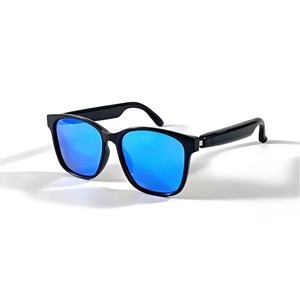
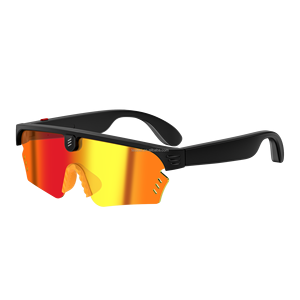
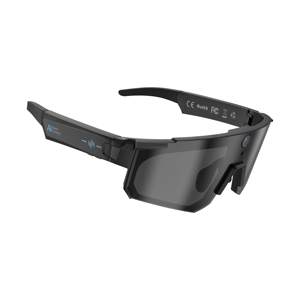

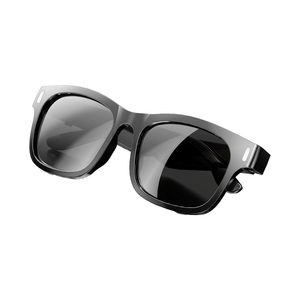
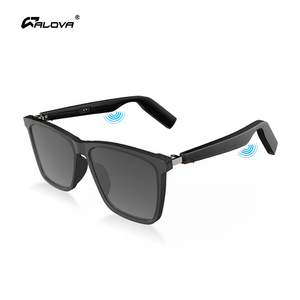
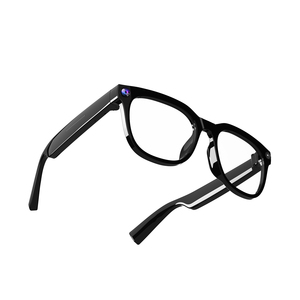
The global eyewear sector is undergoing a monumental paradigm shift. Traditional passive photochromic lenses—historically dependent on slow silver halide chemical reactions activated by ultraviolet radiation—are rapidly giving way to active electrochromic film stacks, integrated micro-optics, and wearable audio platforms. For B2B procurement managers, optical chain buyers, and consumer electronics distributors, identifying a certified, technically capable manufacturing factory is paramount to mitigating supply chain risk and capturing market share in this high-margin vertical.
As a leading ISO-9001 certified OEM/ODM manufacturing facility with advanced Japanese optical engineering roots, our factory specializes in the mass-production of high-yield CE-marked photochromic and electrochromic smart glasses. Our manufacturing architecture bridges the gap between precision optical lens lamination and micro-electronic hardware integration, ensuring full compliance with European Union directive EN ISO 12312-1, US FDA 21 CFR 801.410 drop-ball impact safety standards, and international IPX4/IPX5 water ingress ratings.
Technical Information Gain: Traditional photochromic lenses require 30 to 90 seconds to darken under sun exposure and up to 5 minutes to clear indoors. Our factory's patented Eclipse™ and Prismatic™ electrochromic lens technology uses low-voltage liquid crystal alignment, allowing active tint state shifts in under 0.1 seconds with zero ambient light lag.
Dependent on UV rays. Slow thermal fade-back time. Fails inside UV-blocking vehicles. Variable performance in extreme cold or hot temperatures.
Voltage-driven molecular orientation. Instant manual or sensor control. 65% to 4% VLT range. Works perfectly behind auto windshields.
Our OEM factory provides fully customizable lens substrate formulations and electronic module configurations. The matrix below outlines our core platform specs for commercial wholesale orders:
| Performance Parameter | Standard Photochromic (TAC/PC) | Smart Electrochromic (Eclipse™) | Prismatic™ Color-Shift |
|---|---|---|---|
| Transition Speed (Dark / Clear) | 30s Dark / 180s Clear | < 0.1 Seconds (Instant) | < 0.2 Seconds (Multi-color) |
| VLT Range (Visible Light Trans.) | 85% down to 18% | 63% down to 17% (or 38% to 4%) | 65% down to 20% (4 Palettes) |
| UV Block Rating | 100% UV400 (UVA/UVB) | 100% UV400 (UVA/UVB) | 100% UV400 (UVA/UVB) |
| Windshield / Indoor Switching | No (Requires Direct UV) | Yes (Manual / Touch / Light Sensor) | Yes (Capacitive Temple Tap) |
| Power Consumption | 0 mW (Passive) | Sub-milliwatt (State change only) | Sub-milliwatt (State change only) |
| B2B Certification Standard | CE EN ISO 12312-1 / ANSI Z80.3 | CE RED, FCC, RoHS, REACH, IPX5 | CE, FCC, IPX4, FDA Impact Tested |
Building optical-grade wearable hardware requires specialized cleanroom facilities, high-yield thin-film lamination equipment, and strict automated quality assurance protocols. Over 100,000 active wearers in 40+ international markets rely on our patented lens architectures daily. Here is how our production infrastructure protects your brand identity and market delivery:
Engineered in collaboration with Japanese optical technicians, holding core patents in flexible electrochromic film encapsulation, multi-layer resin bonding, and ultra-low power drive micro-circuits.
Consulted and endorsed by professional sports team ophthalmologists (including Dr. Jay Schwartz, team doctor for professional NBA/MLB franchises) to optimize contrast enhancement, field of vision clarity, and ocular glare protection.
Every manufacturing lot undergoes rigorous drop-ball impact testing, thermal shock cycling (-20°C to 65°C), salt-fog corrosion evaluation, and spectrophotometer VLT calibration to guarantee 100% CE and FDA compliance.
Full support for private-label branding, custom CMF frame colorways (TR90, Swiss Grilamid, Acetate, Titanium), customized optical insert carriers, and single-vision/progressive prescription lens integration (Aura Rx system).
To maintain a competitive edge, optical buyers and retail procurement executives must align their product roadmaps with key technological macro-trends shaping consumer demand. The traditional separation between optical eyewear, prescription frames, and consumer electronics has dissolved entirely.
Consumers no longer want standalone sports sunglasses; they demand dual-purpose acoustic smartwear. Advanced open-ear air conduction audio systems—utilizing dynamic micro-drivers situated in the frame temples—allow wearers to listen to high-fidelity music and complete voice calls while preserving complete situational awareness. Factory integration of Bluetooth 5.3 SoC chipsets with localized electrochromic micro-controllers represents the fastest-growing SKU category in global wholesale orders.
The rise of edge AI processing is transforming photochromic eyewear into ambient intelligence nodes. Modern smart frames integrated with dual beamforming microphones, voice assistants, and real-time translation engines require specialized factory assembly lines equipped for SMT micro-soldering, IPX5 acoustic mesh sealing, and low-latency power management circuits.
European and North American procurement channels are mandating eco-friendly manufacturing metrics. Next-generation factories are transitioning from petroleum-based TR90 polymers to bio-based castor-oil polyamide frames and recyclable polycarbonate lens substrates, backed by full REACH and RoHS material certification documentation.
Historically, photochromic smart glasses could not accommodate high-diopter corrective prescription lenses. Our factory’s Aura Rx engineering breakthrough places single-vision, progressive, or reading prescription optics directly behind the active electrochromic layer, preserving consistent refractive index correction while tint states transition seamlessly.
Understanding the internal layer stack of modern photochromic and electrochromic optics empowers B2B buyers to make informed factory auditing decisions. Below is an engineering overview of our proprietary production stack:
Factory Quality Rule: Optical distortion in electronic tint glasses stems from non-uniform film lamination pressure. Our cleanroom lamination process utilizes automated vacuum-autoclave presses operating at 0.01mm tolerance, eliminating light diffraction and rainbow fringe effects.
Answers to critical questions asked by procurement directors, factory auditors, and OEM buyers:
Our photochromic and electrochromic eyewear fully complies with European standard EN ISO 12312-1 (Eye and face protection - Sunglasses and related eyewear) and EN 174 (Personal eye-protection for downhill skiing). For smart audio/electronic models, our products also carry CE RED (Radio Equipment Directive 2014/53/EU), RoHS 2.0 (2011/65/EU), REACH material compliance, and EN 62479 electromagnetic safety certifications.
We provide full end-to-end ODM/OEM manufacturing services. This includes industrial design (CAD/Rhino modeling), custom tooling mold creation, frame injection (TR90 / Acetate / Aluminum-Magnesium), custom PCB acoustic layout, silkscreen/laser brand logo application, and retail packaging creation. Typical sample turnaround is 7–14 days, with mass production delivered in 30–45 days.
For standard in-stock factory catalog models, our MOQ starts at 50 to 100 units (ideal for distributor sampling). For custom OEM frame colorways, specialized lens tint tuning, or private label laser engraving, the standard MOQ is 500 units per style. Large-scale retail chain buyers can access customized volume tiered pricing schedules.
We offer customized dynamic tint curves based on your target geographic market or sport discipline. Standard sports models transition from 63% VLT (low ambient light / overcast) to 17% VLT (bright sunlight). Lifestyle or driving models can be calibrated from 38% VLT to an extreme 4% extra-dark solar tint state.
Traditional chemical photochromic lenses suffer from thermal sluggishness; in extreme cold weather, they lock in dark states and switch back slowly. Our factory's active electrochromic film technology operates via electronic state switching unaffected by temperature, delivering consistent instant sub-second performance from -20°C to +60°C.
Tint-only electronic frames utilize micro-capacitors delivering days of continuous operation, as power is drawn exclusively during the tint state shift. Integrated audio platforms feature high-density lithium polymer batteries providing 6 to 8 hours of continuous audio playback at 70% volume. Quick-charge magnetic docking terminals reach 80% battery capacity in under 60 minutes.
Yes. Our Aura Rx and custom optical frame architectures feature universal inner optical clip adapters or direct rimless optical mounts that accommodate standard prescription lens grinding (single vision, bifocal, and progressive lenses) directly behind the dynamic electrochromic panel.
Our production line operates under strict AQL 1.0 / 2.5 inspection criteria. Every finished unit undergoes automated optical alignment, battery stress testing, acoustic speaker frequency response testing, and IPX water jet spray validation. We support B2B client contracts with a 1-year factory warranty and direct spare parts/replacement allocation.
Partner with a certified industry-leading photochromic and electrochromic manufacturer. Contact our B2B engineering team today for factory catalog pricing, technical datasheets, CE compliance docs, and sample requests.