4.7★ / 9,201 Reviews · 100K+ Customers · TIME Best Invention · Fast & Free Shipping

Industrial Supply Catalog
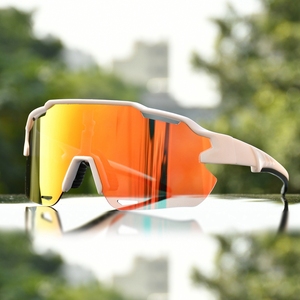
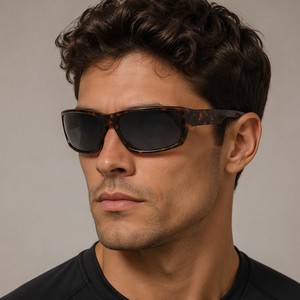
In the highly specialized marine recreation and professional sport fishing sectors, eyewear serves as a fundamental optical tool rather than a mere fashion accessory. Marine environments present extreme lighting conditions characterized by intense specular reflections (glare) off the water's surface, harmful ultraviolet radiation (UVA/UVB up to 400nm), and dynamic light changes between deep water, shallow flats, and shaded coastal margins. For global eyewear brand managers, retail distributors, and procurement directors, partnering with a leading China best fishing sunglasses factory is vital to securing proprietary optical technology, regulatory compliance, and scalable manufacturing capability.
As modern search engine algorithms evolve toward semantic intent evaluation, demonstrating real technical Information Gain requires breaking down the exact optical physics, material compositions, and manufacturing tolerance thresholds that govern premium marine sunglasses. Below is an engineering analysis of how advanced Chinese manufacturers execute precision optical OEM/ODM programs.
Horizontal surface glare occurs when sunlight strikes water at a shallow angle, polarizing the reflected light horizontally. Premium fishing sunglasses utilize a micro-thin polyvinyl alcohol (PVA) polarized film laminated between optical lens layers. In top-tier OEM factories, this film is stretched under controlled thermal conditions to align iodine crystals linearly, creating an optical filter with a polarization efficiency exceeding 99.0%.
| Lens Tint / Technology | VLT Range (%) | Ideal Marine Environment | Optical Target & Benefit |
|---|---|---|---|
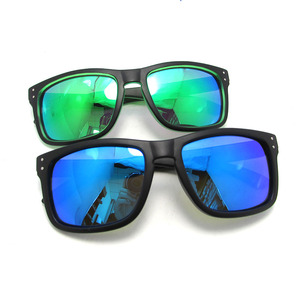
| Deep Water Blue Mirror (REVO) | 9% – 12% | Offshore / Deep Ocean Angling | Reflects high-intensity overhead glare; optimizes contrast on open blue water. |
| Inshore Amber / Copper Base | 14% – 18% | Shallow Flats / Estuaries / Rivers | Enhances red-green contrast; enables sight-fishing by highlighting fish underwater. |
| Yellow / Green High Contrast | 22% – 30% | Dawn, Dusk & Overcast Conditions | Maximizes light transmission in low-light environments while maintaining polarized clarity. |
| Electrochromic Liquid Crystal (EC) | 4% – 65% (Dynamic) | All-Day Variable Weather & Sport | Instant electron-driven tint shift (<0.1s); eliminates manual lens swapping. |
Factory precision during lens lamination is essential: if the polarization alignment axis deviates by more than 1.5 degrees from the horizontal plane, the user experiences severe optical distortion and fatigue. China's top exporters enforce automated vision inspection systems on 100% of lens production lines to guarantee axis alignment compliance with ISO 12312-1 and ANSI Z80.3 standards.
To survive saltwater corrosion, extreme thermal cycles (-20°C to +60°C), physical impacts, and prolonged UV immersion, specialized polymers and optical substrate formulations are required.
Swiss EMS Grilamid TR90 is the global gold standard for performance frame injection molding. Featuring ultra-high flexural fatigue strength, zero moisture absorption, and low density (1.14 g/cm³), TR90 frames wrap ergonomically around the face without applying pressure to the temporal bones.
Polymethylpentene (TPX) frame formulations yield a specific gravity of under 0.83 g/cm³—significantly lighter than water. When dropped into ocean depths, TPX sunglasses instantly surface, protecting high-value optical assets from being lost permanently in marine waters.
TAC 1.1mm lenses offer superior optical clarity, zero rainbowing, and hard-coat scratch resistance at cost-effective price points. Polycarbonate (PC) and Injection Nylon lenses provide ballistics-grade shatterproof impact resistance for high-speed powerboating.
Water droplets, salt spray residue, and facial oils severely degrade vision on the water. Modern Chinese export factories utilize advanced Vacuum Vacuum Deposition (PVD) chambers to apply multi-layer hydrophobic and oleophobic nano-film stacks. This process achieves a water contact angle exceeding 110 degrees. Water droplets bead up instantly and slide off the lens surface under wind shear, leaving zero mineral spot deposits behind.
As international consumer demand shifts toward high-tech, multifunctional, and environmentally sustainable sports gear, B2B buyers must align their supply chain with next-generation manufacturing capabilities.
Integrating micro-voltage electrochromic film layers into polarized sport frames allows users to change lens Visible Light Transmission (VLT) manually or automatically via capacitive touch sensors. As pioneered by innovative Japanese engineering and commercialized at scale by top Chinese manufacturing partners, electrochromic fishing glasses transition from dusk-friendly 65% VLT to intense sun-blocking 4% VLT in under 0.1 seconds—driven by ultra-low-power microcontrollers.
Global ESG regulations and eco-conscious consumer demographics are driving demand for bio-based castor-oil TR90 polymers and biodegradable cellulose frames. Chinese exporters are leading the transition to renewable raw material inputs, reducing the carbon footprint of optical frame production by up to 45% while preserving chemical resistance to saltwater.
Anglers require situational awareness for navigation safety, VHF radio contact, and personal calls while keeping their hands free on the rod. Modern OEM designs embed IPX4/IPX7 waterproof directional micro-speakers and noise-canceling dual mics into frame temples, blending high-end polarized optics with smart connectivity.
Over 40% of adult outdoor enthusiasts require vision correction. Sourcing fishing frames equipped with clip-on optical Rx inserts or custom-ground prescription electrochromic lenses opens high-margin revenue streams for brand owners in North American and European markets.
Navigating global optical supply chains requires a partner capable of executing complex OEM/ODM projects with rigorous quality control, agile prototyping, and strict intellectual property protection.
From 3D CAD modeling, rapid optical prototyping, and mold fabrication to automated TR90 injection, vacuum REVO coating, and hand assembly, vertical integration shortens product development cycles from months to weeks.
In-house optical testing laboratories conduct continuous FDA Drop Ball impact tests, UV spectrophotometry, polariscope stress tests, and 240-hour salt spray corrosion resistance evaluations to ensure 100% international compliance.
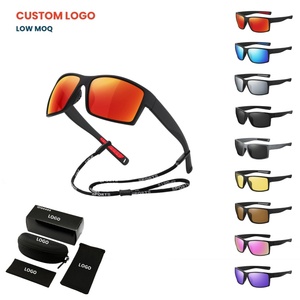
Supporting dynamic market entry, our factory offers flexible low Minimum Order Quantities (MOQ) for custom brand logos, bespoke Pantone frame colors, custom packaging boxes, laser etching, and private label programs.
Accelerate your brand's growth with engineered polarization technology, Swiss TR90 frames, electrochromic optics, and certified compliance. Request our complete wholesale product catalog and factory profile today.