Flagship Smart & Variable Tint Eyewear Series
Engineered with patented electrochromic film, instant tint-switching microcircuits, photochromic optics, and open-ear acoustic drivers for global B2B wholesale and private label brands.
Voice Control
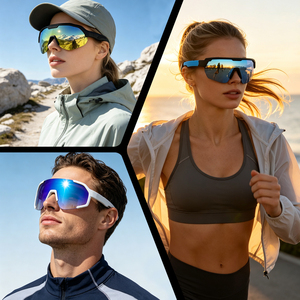
Polarized UV400 Smart Glasses Voice Control Handsfree Call Outdoor Sport Driving Audio Sunglasses
UV400 Protection
Voice Assistant
Handsfree Call
Send an Inquiry
IPX-5 Waterproof
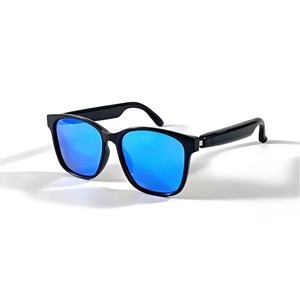
AI Smart Audio Glasses Voice Assistant Navigation HD Music Call Headset Polarized Lenses Anti-Blue Light Touch-Based IPX-5
Anti-Blue Light
Touch Control
HD Music
Send an Inquiry
Hot Seller
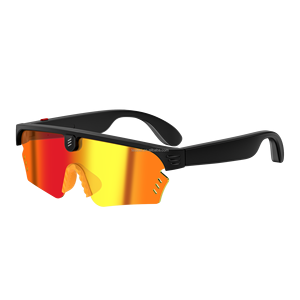
Hot Sale Low Price Smart Wireless Sunglasses Headphones Audio Headsets Music Call Driving Glasses Touch Control Cycling Glasses
Cycling Sport
Bluetooth 5.3
Touch Interface
Send an Inquiry
AI Translation

Smart AI Camera Glasses with Video Recording Bluetooth Audio Music Playback Voice Assistant Real Time Translation Sunglasses
Video Recording
Real-time AI
Open Audio
Send an Inquiry
Unisex Style
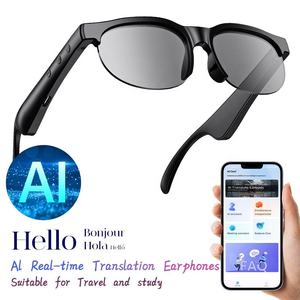
Men Women Smart Glasses Wireless Sunglasses Built-in Microphone Speakers Touch Voice Assistant AI Smart Translator Glasses Gafas
Dual Speakers
AI Translation
Ergonomic Frame
Send an Inquiry
Magnetic Charge
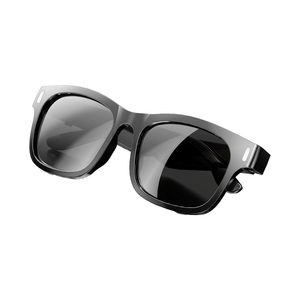
Smart Audio Cycling Glasses 5.3 Voice Assistant Music Calling AI Translation UV Protect Wearable Devices Magnetic Charging Touch
Magnetic Pin
High-Wrap Wrap
UV Shield
Send an Inquiry
Air Conduction
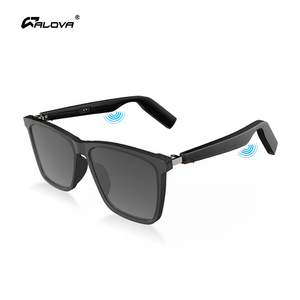
ALOVA Air Conduction Earphone Glasses with Speaker Wireless Bluetooth Smart Audio Headphone Sunglasses
Air Conduction
Directional Sound
Ultra Light
Send an Inquiry
Photochromic Tint
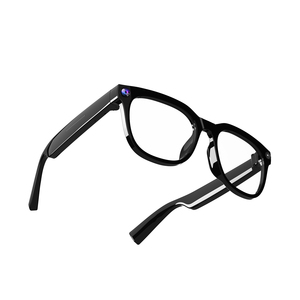
Smart Photochromic Glasses Bluetooth Air Conduction Music Calling Game Navigation Wearable Fashion Audio Eyewear
Adaptive Tint
Low Latency
Gaming Audio
Send an Inquiry
< 0.1s
Tint Transition Speed
65% – 4%
Dynamic VLT Range
IPX4 / IPX5
Water & Sweat Resistance
1. Technical Architecture of Variable Eyewear: Electrochromic vs. Photochromic
As the global market transitions from traditional static sunglasses toward smart, responsive optical wearables, original equipment manufacturers (OEMs) and brand owners require a thorough understanding of current lens physics. Variable eyewear technology broadly falls into two technical categories: Active Electrochromic (EC) / Guest-Host Liquid Crystal (GH-LCD) Optics and Passive Photochromic Optics.
Traditional photochromic lenses depend on solar UV intensity to trigger chemical rearrangements inside silver halide or oxazine molecules. While cost-effective, passive photochromic lenses suffer from significant latency (often requiring 30 to 120 seconds to darken and up to 5 minutes to clear) and fail to activate behind UV-blocking automotive windshields. In contrast, China’s top variable eyewear manufacturers have pioneered active electrochromic film lamination. By encapsulating an ultra-thin conductive polymer or ion-conductive film between optical-grade polycarbonate (PC) or polyamide (Nylon) sheets, a micro-controller housed in the temple can apply a fractional voltage signal (under 3V). This reorients the molecular alignment in under 0.1 seconds, allowing instantaneous tap-to-tint or slide-to-tint control regardless of ambient UV light or ambient temperature.
- Eclipse™ Instant Tint Engineering: Seamless manual or automated control across Visible Light Transmission (VLT) channels from clear indoor states (63%–65% VLT) to deep outdoor protection (4%–17% VLT).
- Prismatic™ Multi-Hue Color Shift: Advanced electrochromic stacks capable of altering light refraction profiles to change perceived lens color output (e.g., shifting dynamically across four distinct tinted palettes within a single optical rim).
- Prescription Rx Layering (Aura Rx Integration): Modern variable eyewear platforms accommodate single-vision, progressive, and reading prescription inserts directly behind the active electrochromic substrate without distorting optical focal lengths.
Variable Lens Technology Comparison Matrix
A comparative overview evaluating key optical performance parameters across next-generation variable tint eyewear technologies for B2B procurement decisions.
| Technology Type |
Activation Mechanism |
Response Time |
VLT Range Control |
Windshield Performance |
Primary Application Field |
| Active Electrochromic (EC) |
Electric Potential (Low Voltage Signal) |
< 0.1 to 1.0 Sec |
On-Demand (Continuous / Stepped) |
Full Functionality (100%) |
High-Performance Sports, Driving, Aviation |
| Guest-Host LCD (GH-LCD) |
Liquid Crystal Molecular Realignment |
< 0.05 Sec |
Binary / Multi-step Switch |
Full Functionality (100%) |
Cycling Shields, Tactical Goggles |
| Passive Photochromic (TAC) |
Ambient Solar UV Light Exposure |
30 – 300 Sec |
Passive Solar Dependent |
Non-functional (Blocked by UV Glass) |
General Prescription Daily Wear |
| Polarized Static Tint |
Passive Micro-slitted Film Filter |
N/A (Static) |
Fixed VLT (e.g., 12% Constant) |
Glare Reduction Only |
Boating, Fishing, Everyday Fashion |
2. Sourcing & Procurement Trends in Variable Eyewear (2025–2030)
Global buyer intent data indicates a dramatic convergence between classic optical frame manufacturing and consumer electronic miniaturization. Procurement teams from North America, Europe, and East Asia are demanding turnkey supply chains capable of delivering multi-functional hybrid wearables. Key sourcing trends shaping China's variable eyewear sector include:
1. Convergence of Open-Ear Audio
Buyers no longer look for tint control in isolation. Over 68% of high-end RFQs specify dual directional acoustic speakers integrated into slim TR90 or acetate temples, providing Bluetooth 5.3 voice call clarity, real-time AI translation, and ambient sound awareness during outdoor training.
2. Micro-weight & Ergonomics
First-generation electronic glasses suffered from heavy temple weight (> 65g). Advanced Chinese manufacturing facilities now utilize co-molded titanium-TR90 frames and flexible PCB circuitry, reducing total frame weight to under 38g for true all-day wearability.
3. IPX4 / IPX5 Ruggedization
End-users demand sports-grade durability. Leading suppliers employ precision ultrasonic welding, hydrophobic nano-coatings, and sealed magnetic charging ports to prevent moisture ingress from heavy sweat, rainfall, and high-velocity trail dust.
Furthermore, sustainability and regulatory compliance have become mandatory criteria. Global importers require suppliers to hold ISO9001 certified quality management systems, complete CE, FCC, RoHS, and FDA device registration, and adhere to ANSI Z80.3 optical clarity standards.
Why Partner With China’s Leading Variable Eyewear Factory
Combining Japanese optical engineering standards with scalable Shenzhen/Wenzhou electronic manufacturing ecosystems to deliver robust OEM/ODM production pipelines.
Patented Electrochromic Lamination
Our cleanroom production facility features multi-layer thin-film vacuum sputtering equipment. We bond electrochromic polymers between optical PC layers with zero micro-bubbles, ensuring ultra-clear transparency in high-VLT states and zero haze under intense solar reflection.
Smart Audio & AI Integration
With an in-house team of acoustic and firmware engineers, we offer full custom SDK development for spatial audio tuning, capacitive touch gesture mapping, and voice assistant integration (supporting Apple Siri, Google Assistant, and custom AI translation APIs).
Rigorous Quality Assurance & Testing
Every batch undergoes stringent testing: 10,000+ electronic tint state cycle tests, IPX4/IPX5 rain chamber immersion, drop impact testing, high-temperature/high-humidity chamber aging, and 100% UV spectrum photometer verification before shipment.
Frequently Asked Sourcing & Procurement Questions (FAQ)
Essential insights for brand managers, optical distributors, and B2B buyers looking to customize and import variable eyewear from China.
Q1. How does active electrochromic lens technology differ from standard photochromic lenses?
Active electrochromic (EC) lenses utilize micro-conductive film layers that switch tint in less than one second upon receiving a low-voltage electrical signal from temple controls (touch tap or slider). Standard passive photochromic lenses rely on chemical reactions to UV radiation, taking up to 5 minutes to adjust and failing inside cars where glass blocks UV light. EC lenses work reliably anywhere, anytime.
Q2. What visible light transmission (VLT) ranges can be customized for OEM orders?
We offer flexible VLT engineering based on your market segment. Sports shield platforms typically range from 63% VLT (light tint for overcast/dusk conditions) down to 17% VLT (bright sun). Lifestyle and driving models can cover 38% down to 4% deep tint. Specialized Prismatic™ builds permit cycling across four distinct lens color hue profiles.
Q3. Do your smart audio variable eyewear frames require a dedicated smartphone app?
No app is strictly required for core functionality. Lens tint adjustments, audio playback, volume tweaks, and call management operate directly via capacitive temple sensors or physical buttons on the frame. However, we provide optional white-label iOS/Android companion apps for brands wishing to offer custom EQ tuning, VLT preset saving, and over-the-air (OTA) firmware updates.
Q4. Can prescription corrective lenses (Rx) be combined with electronic variable tint optics?
Yes. Our Aura Rx platform features a modular dual-layer frame design. The front active electrochromic lens controls ambient light transmission, while a specialized clip-in or integrated inner carrier holds single-vision, progressive, or reading prescription lenses without altering electrochromic performance.
Q5. What is the battery lifespan, and how does electronic tinting impact power consumption?
Electrochromic film technology uses bistable or low-energy holding states; electrical power is primarily consumed during the dynamic switching phase. Tint-only frames operate for several weeks on a single charge. Combined audio-and-tint platforms provide 6 to 8 hours of continuous Bluetooth audio playback, with rapid magnetic charging reaching 80% battery capacity in roughly 80 minutes.
Q6. What are your Minimum Order Quantities (MOQ) and OEM customization capabilities?
For standard catalog models with custom laser logo engraving and custom packaging, our MOQ starts at 100 units. For full OEM/ODM manufacturing—including custom frame tooling, specialized pantone colorways, customized VLT calibration curves, and Bluetooth pairing names—the MOQ is typically 1,000 units per style.
Partner With China's Premier Variable Eyewear Manufacturer
Whether you require custom OEM electrochromic sports sunglasses, smart audio integration, or private-label wholesale solutions, our optical engineering team is ready to realize your vision.
