China Top Titanium Eyewear Factories & OEM Manufacturing Report

Engineering Benchmark & Strategic Sourcing Guide: Pure Titanium Gr2, Beta-Titanium Ti-15-3-3-3, Electrochromic Optics, and High-Precision B2B OEM/ODM Solutions

Top-Ranked OEM/ODM Smart & Titanium Eyewear Platforms

Factory-direct wholesale catalogue featuring integrated open-ear audio, electrochromic smart tinting, polarized optics, and ultra-light titanium frame chassis.

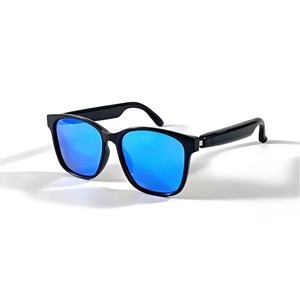
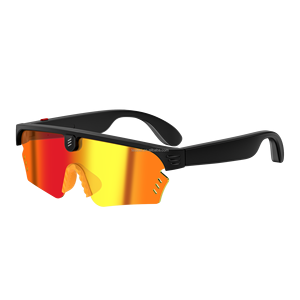
Polarized UV400 Smart Glasses Voice Control Audio Sunglasses

Polarized UV400 Smart Glasses Voice Control Handsfree Call Outdoor Sport Audio Sunglasses

UV400 Polarized Voice Control Sport Chassis
Get Catalog
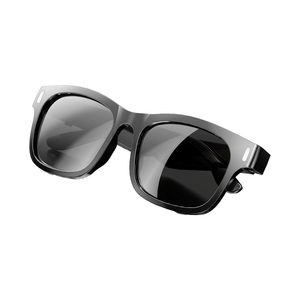
AI Smart Audio Glasses Voice Assistant Anti-Blue Light IPX-5

AI Smart Audio Glasses Voice Assistant Navigation HD Music Call Headset Anti-Blue Light IPX-5

IPX-5 Waterproof AI Assistant Anti-Blue
Get Catalog
Smart Wireless Sunglasses Headphones Audio Headsets Touch Control

Smart Wireless Sunglasses Headphones Audio Headsets Touch Control Cycling Glasses

Touch Control Cycling Fit Low Latency
Get Catalog
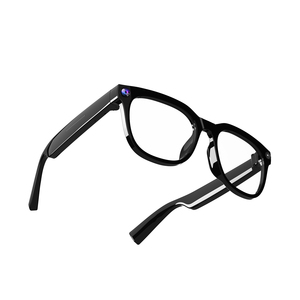
Smart AI Camera Glasses Video Recording Real Time Translation

Smart AI Camera Glasses with Video Recording Bluetooth Audio Real Time Translation

HD Camera AI Translator Audio Capture
Get Catalog
Smart Glasses Built-in Microphone Speakers AI Translator

Men Women Smart Glasses Wireless Sunglasses Built-in Speakers Touch Voice AI Translator Gafas

Dual Mic Unisex Style Noise Cancel
Get Catalog
Smart Audio Cycling Glasses Bluetooth 5.3 Magnetic Charging

Smart Audio Cycling Glasses Bluetooth 5.3 AI Translation Magnetic Charging Touch Control

Bluetooth 5.3 Mag-Charge UV Shield
Get Catalog
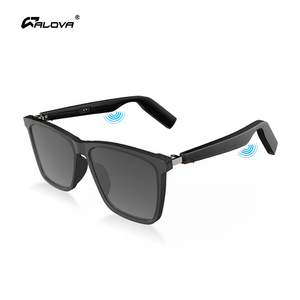
Air Conduction Earphone Glasses Wireless Bluetooth Audio

ALOVA Air Conduction Earphone Glasses Speaker Wireless Bluetooth Smart Audio Sunglasses

Air Conduction Lightweight Open-Ear
Get Catalog
Smart Photochromic Glasses Bluetooth Air Conduction Navigation

Smart Photochromic Glasses Bluetooth Air Conduction Music Calling Game Navigation Eyewear

Photochromic Low Latency Auto-Tint
Get Catalog
25+
Years Metallurgical Precision
99.8%
CNC Machining Yield Rate
100,000+
Hinge Flex Cycle Test
40+
Global B2B Wholesale Markets

China Titanium Eyewear Manufacturing Ecosystem: Strategic B2B Sourcing Analysis

The global optical and sunwear industry is experiencing a decisive structural migration toward ultra-lightweight, hypoallergenic, and bio-compatible materials. Among premium frame substrates, titanium (Pure Titanium Grade 2 & Beta-Titanium Ti-15V-3Cr-3Sn-3Al) represents the pinnacle of structural integrity, corrosion resistance, and spatial weight efficiency. As global eyewear brands, independent optical groups, and private-label distributors seek competitive differentiation, sourcing from top-tier Chinese titanium frame manufacturers in Shenzhen, Dongguan, and Danyang has become a cornerstone of supply-chain strategy.

Modern Chinese manufacturing clusters have advanced beyond elementary stamping and wire-bending into ultra-precision 5-axis CNC micro-milling, sub-zero vacuum laser welding, zero-emission Physical Vapor Deposition (PVD) ion plating, and micro-electronic integration (including capacitive tap-to-tint electrochromic film layers and open-ear Bluetooth audio chassis). This whitepaper provides procurement directors, brand executives, and supply chain managers with an authoritative engineering benchmark for qualifying China's leading titanium eyewear factories.

Material Science Breakdown: Pure Titanium vs. Beta-Titanium

Technical evaluation matrix for OEM frame selection based on mechanical yield, elasticity, and manufacturing complexity.

Substrate Grade Metallurgical Composition Tensile Strength (MPa) Flexural Elasticity Primary Application in Eyewear OEM Welding Complexity
Pure Titanium (Grade 2) Ti > 99.2%, Fe < 0.30%, C < 0.08% 480 - 550 Moderate (Rigid Structure) Front rims, bridge components, high-stability optical chassis High (Requires Argon Shielding)
Beta-Titanium (Ti-15-3-3-3) Ti-15V-3Cr-3Sn-3Al Alloy 880 - 1050 Ultra-High (Memory Spring Back) Flex temples, rimless bridge wires, ultra-thin temples (<0.8mm) Extreme (Precision Laser Pulse)
Memory Titanium (Ni-Ti Shape Alloy) Nickel-Titanium Intermetallic 850 - 1100 Super-Elastic (Deformable to 8%) Sport bridges, children’s eyewear, bendable active sport frames Specialized Mechanical Crimping
Titanium-Magnesium Composite Proprietary Ultra-Light Matrix 620 - 720 High Stiffness-to-Weight Ratio Smart audio temple cores, integrated electronic frames Customized Micro-Fasteners

Core Technological Superiorities of Top Chinese Factories

Key technological innovations driving the global competitive advantage of China's premier titanium manufacturing facilities.

5-Axis CNC Micro-Milling

State-of-the-art Chinese factories utilize multi-spindle 5-axis CNC machining centers capable of maintaining structural tolerances down to ±0.02mm. This enables intricate 3D geometric faceting, seamless rim grooves for prescription lenses, and integrated internal cavities for housing micro-circuitry.

Argon-Shielded Micro Laser Welding

Titanium readily oxidizes at elevated temperatures, leading to brittle joints. Premier OEMs employ automated vacuum argon gas chambers and pulse-frequency laser micro-welders, ensuring joint fatigue resistance exceeding 100,000 deflection cycles without structural degradation.

Eco-Friendly PVD Vacuum Ion Plating

Replacing traditional wet electroplating, top-tier plants implement multi-layer Physical Vapor Deposition (PVD). This process deposits titanium nitride (TiN) or carbon-based coatings in high-vacuum chambers, producing scratch-resistant, nickel-free, non-allergenic finishes with superior artificial sweat resistance (ISO 12870 verified).

Smart Electrochromic (EC) Integration

Leading facilities are converging titanium precision metalwork with electrochromic film technologies. Frames are engineered to house ultra-thin EC film stacks, low-power Bluetooth modules, and capacitive touch sensors, enabling tap-to-tint lens control in under 0.1 seconds.

Automated Ergonomic Weight Distribution

Using digital finite element analysis (FEA), titanium frames are optimized for nasal pressure relief and temporal clamping force. Weight distribution is balanced to achieve sub-15 gram frame chassis assemblies even when incorporating smart audio drivers or prescription lens inserts.

Full ESG & REACH Compliance

Top-tier China factories provide comprehensive material traceability from raw titanium sponge ingot origin to final frame finishing. All chemical treatments comply with EU REACH standards, California Proposition 65, and RoHS environmental directives.

Industry Development & Future Sourcing Trends (2025–2030)

The global titanium eyewear manufacturing sector is entering a technological convergence era. B2B buyers must anticipate several macro trends when selecting OEM manufacturing partners in China over the next decade:

  • Convergence of Smart Hardware and Ultra-Light Metal Alloys: Traditional plastic and acetate smart glasses are frequently criticized for excess bulk and balance issues. Modern buyers are shifting inquiries toward hybrid titanium chassis where micro-circuits, bone-conduction/air-conduction drivers, and battery cells are recessed directly inside hollow-milled Beta-Titanium temples.
  • Additive Manufacturing (SLM 3D Printing in Titanium): Selective Laser Melting (SLM) technology is allowing top Chinese facilities to print complex cellular titanium frame geometries impossible to execute via traditional forging or CNC milling. This facilitates custom, zero-waste bespoke frame production with rapid tooling-free sampling cycles under 7 days.
  • Closed-Loop Circular Recycling Systems: High-end manufacturers are implementing in-house titanium chip briquetting and vacuum re-melting systems to recycle 100% of CNC swarf, drastically reducing raw material carbon footprints and offering global brands verifiable ESG credentials.
  • Instant-Tint Electrochromic & Dynamic Optics Lamination: Smart tinting lenses (like Eclipse™ and Prismatic™ multi-color liquid crystal technologies) require absolute rim stability. Pure Titanium frames provide zero thermal expansion and rigid mechanical protection required to prevent delamination of sensitive electrochromic lens layers.

Factory Qualification & Enterprise Manufacturing Competencies

Selecting an industry-leading Chinese titanium factory requires evaluating technical audit parameters beyond basic factory floor area. A qualified OEM partner must demonstrate mastery across five critical operational pillars:

1. Metallurgical Pure Raw Sourcing

Direct supply contracts with Grade 1 titanium sponge refineries ensure zero contamination from scrap iron or low-grade recycled alloys. Every raw batch is verified via X-ray fluorescence (XRF) spectroscopy prior to drawing or rolling.

2. In-House Tooling & Mold Workshop

Equipped with high-speed CNC EDM spark machines and wire-cut cutters, enabling custom frame mold development, stamping die fabrication, and rapid prototyping within 10 to 14 business days.

3. ISO 13485 & Medical-Grade Cleanrooms

Class 10,000 dust-free cleanroom assembly lines for electrochromic lens insertion, optical testing, and micro-electronic soldering, ensuring zero particulate contamination in active optical layers.

4. Rigorous Quality Assurance Protocol

Every production run undergoes 100% inspection including 96-hour artificial sweat immersion tests, 5kg bridge pull-strength verification, optical distortion mapping, and IPX4/IPX5 moisture ingress testing.

China Titanium Eyewear Procurement FAQ

Detailed technical answers for global buyers, optical product managers, and supply chain directors.

What is the typical MOQ (Minimum Order Quantity) for OEM titanium frame production in China?
Standard OEM production minimums for pure titanium or Beta-Titanium frames typically range from 300 to 500 pieces per SKU colorway. For advanced smart audio or electrochromic integrated frames requiring custom PCB and injection tooling, baseline MOQs may start at 1,000 units. However, rapid-prototype sample runs (10-50 pieces) are available for brand qualification testing.
How do Chinese factories verify the purity of Pure Titanium vs. Beta-Titanium frames?
Top-tier Chinese manufacturers provide full Material Test Reports (MTR) backed by X-ray Fluorescence (XRF) spectroscopy and ICP-OES chemical analysis. Furthermore, physical testing including tensile yield strength measurement (ISO 6892) and density verification (~4.51 g/cm³) ensures frames are free from nickel contamination or cheap alloy substitutes.
Why is PVD coating preferred over traditional electroplating for titanium frames?
Physical Vapor Deposition (PVD) occurs in high-vacuum plasma chambers, creating an atomic-level bond with the titanium substrate. It yields a significantly harder surface (Vickers hardness > 2000 HV), eliminates eco-hazardous liquid chemical waste, ensures 100% nickel-free biocompatibility, and prevents color fading or peeling under prolonged exposure to human sweat and UV radiation.
Can smart audio hardware and electrochromic film layers be fitted into prescription titanium frames?
Yes. Leading OEM manufacturers offer "Rx-Ready" structural architectures. The titanium front rim retains standard optical bevel grooves (V-bevel or step bevel) accepting single-vision, progressive, or reading prescription lenses, while electrochromic filter films or open-ear audio drivers are housed independently in specialized sub-assemblies.
What international quality certifications are required for importing titanium eyewear from China?
To import into major global markets, manufacturers must hold ISO 9001 quality management certification, ISO 13485 (medical device standards for prescription frames), CE compliance under EU Regulation 2017/745 (MDR), FDA registration for the United States, and REACH/RoHS environmental chemical compliance certificates.
How long is the product development cycle from CAD design to final mass production delivery?
A standard OEM timeline proceeds as follows: 2D/3D CAD design finalization (3-5 days), 3D SLA printed hand-sample (3-5 days), functional CNC titanium prototype (14-20 days), mold and tooling fabrication (30 days), and full mass production delivery (45-60 days upon sample sign-off).
How do factories protect client Intellectual Property (IP) and proprietary frame designs?
Reputable Chinese factories execute comprehensive Non-Disclosure & Non-Circumvention Agreements (NNN Agreements) under Chinese law prior to receiving CAD files. Furthermore, proprietary tooling molds are indexed, stored in secure vaults, and dedicated exclusively to the IP owner without cross-sharing to open wholesale channels.

Partner with China's Premier Titanium Eyewear OEM Factory

Request complete product specifications, technical whitepapers, material certifications, and wholesale OEM pricing directly from our engineering team.

Get Catalog