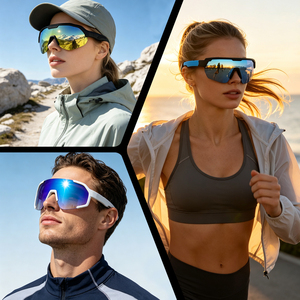
4.7★ / 9,201 Reviews · 100K+ Customers · TIME Best Invention · Fast & Free Shipping

Engineered for high-volume wholesale, private label customization, and international optical compliance. Below are our leading electronic eyewear platforms available for global export.
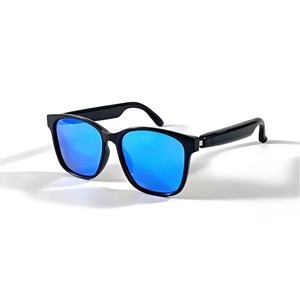
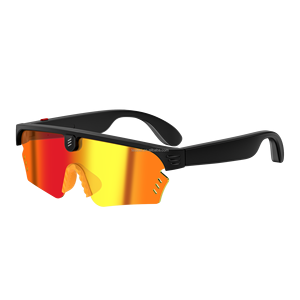
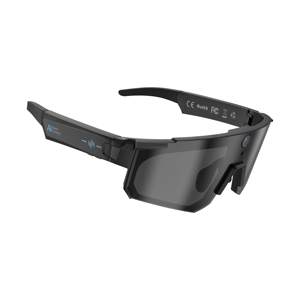
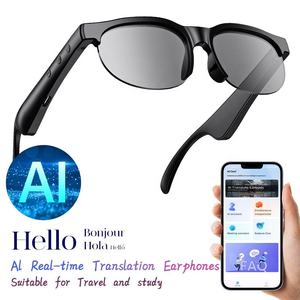
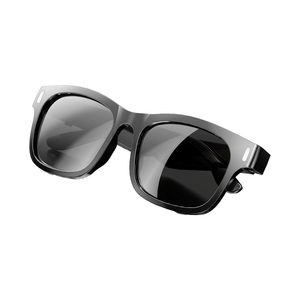
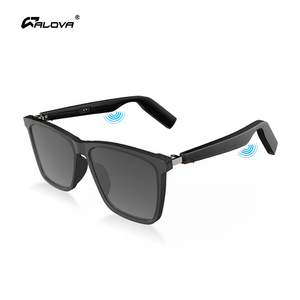
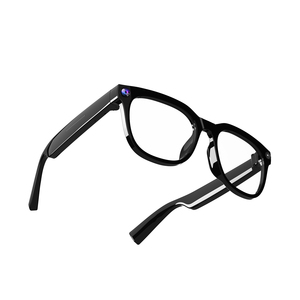
We bridge cutting-edge optical physics, micro-electronics lamination, and ergonomic frame design to deliver market-ready smart eyewear platforms validated by global retail networks.
Unlike standard tint coatings or slow chemical photochromic lenses that rely on UV intensity, our proprietary Eclipse™ and Prismatic™ electrochromic film stacks alter molecular alignment instantly. Controlled via micro-currents driven by temple touchpads, VLT shifts dynamically across ranges as low as 4% up to 65% in less than 0.1 seconds.
Our frame geometry and tint curves are developed in consultation with leading sports physicians, including Dr. Jay Schwartz (Team Doctor for professional basketball and baseball franchises). We optimize contrast tuning for high-velocity environments like cycling, court sports, and golf, ensuring 100% UVA/UVB blockage and glare prevention.
Operating dust-free optical assembly facilities in China's prime electronics corridors, our factory integrates automated lens lamination, micro-acoustic driver tuning, SMT surface mounting for Bluetooth 5.3 microchips, and computerized water-immersion testing rigs. We ensure every unit satisfies strict global quality benchmarks.
Analyze how our manufactured platforms fit into your catalog positioning—from light lifestyle frames to high-performance endurance sport gear.
| Platform Category | VLT Control Range | Optical Technology | Audio & Connectivity | Battery / Standby | Target End-Market |
|---|---|---|---|---|---|
| Electrochromic Instant Tint | 65% → 20% / 38% → 4% | Patented EC Liquid Crystal Film | Capacitive Touch / Optional App | 100+ Hours (Static Tint) | Golf, Driving, Tactical, Outdoor |
| Prismatic™ Color-Change | 4 Dynamic Color States | Electrochromic Palette Shift | Temple Tap Sensor | 80+ Hours Active Shift | Fashion, Lifestyle, D2C Brands |
| Open-Ear Sport Audio | 63% → 17% (Linear Slider) | Polycarbonate Polarized Shield | BT 5.3 + Air Conduction Speakers | 6.5 Hours Audio / IPX4 Rated | Running, Cycling, Marathon, Triathlons |
| AI Camera & Voice Translator | UV400 / Photochromic Auto | HD Optical Lens + Anti-Blue Light | 1080P Mini Cam + Dual Noise-Canceling Mic | 4 Hours Video / Real-time Cloud AI | Content Creators, Tech Enterprise |
| Rx Prescription Smart Eyewear | Custom Tint Lamination | Dual-Layer Prescription Inserts | Invisible Temple Micro-Speakers | Full Day Mixed Active Use | Optometry Chains, Boutique Retail |
Understanding shifting consumer demands and technological convergence is critical for enterprise optical buyers, consumer electronic importers, and retail brand strategists looking to maintain competitive margins over the next 3 to 5 years.
Traditional photochromic lenses (chemical tinting via UV reaction) suffer from severe limitations: slow transition speeds (taking 60 to 180 seconds to clear), complete failure to darken inside automobiles due to UV-blocking windshields, and rapid performance degradation in ambient temperatures above 30°C. OEM buyers are increasingly migrating their product lines to active Electrochromic (EC) technology.
Electrochromic smart glasses utilize a low-voltage electrical signal to reorient microscopic liquid crystal molecules or conductive polymers sandwiched within the lens stack. This transition occurs in under a second and functions perfectly inside vehicles, under direct sunlight, or under overcast conditions. For wholesale buyers, stocking EC eyewear offers a distinct value proposition that commands premium retail margins.
Early smart audio glasses were criticized for heavy, bulky temples that strained the ear and leaked audio in quiet environments. The future of OEM smart glasses procurement lies in ergonomic thinness and directional acoustic containment.
Modern manufacturing utilizes custom dual-micro-driver open-ear systems that project reverse soundwaves directly toward the ear canal. This drastically minimizes acoustic leakage while allowing the wearer to remain completely aware of ambient traffic noise—a vital safety feature for cyclists and runners. Furthermore, advanced flexible PCB designs allow temples to match the sleek aesthetics of luxury Italian acetate eyewear, concealing high-density lithium-polymer batteries seamlessly.
Smart eyewear is evolving rapidly from a passive audio/tint accessory into an interactive AI-powered contextual node. Global distributors are seeking factory partners capable of offering integrated SDKs and firmware that pair seamlessly with Large Language Models (LLMs) such as ChatGPT, Google Gemini, and localized AI engines.
Through dual-beamforming microphone arrays integrated into the eyewear frames, users can engage in real-time voice translation across 40+ languages, initiate voice-guided GPS turn-by-turn navigation, and record hands-free ambient memo notes. OEM factories offering customizable firmware stack integration provide brand owners with immediate speed-to-market advantages.
A historic barrier to mass consumer adoption of smart eyewear has been the exclusion of prescription lens wearers. Emerging manufacturing methods solve this bottleneck by combining active electrochromic film layers with custom optical prescription substrates (Single Vision, Progressive, and Reading lenses).
Our OEM manufacturing line features dedicated optical bonding tooling that allows prescription optical labs to fit corrective lenses directly behind or within the active electronic tint layer. Sourcing Rx-ready smart frames allows distributors to target the lucrative optical dispensary channel, opening high-yield recurring sales avenues.
From micro-injection molding to optical chamber calibration, explore how our China-based production facilities deliver high-yield quality control for international brand partners.
Using ultra-light Swiss Grilamid TR90 memory polymer and high-grade aerospace titanium alloys, our mold design teams fabricate frame housings capable of surviving extreme flexure while isolating electronic components from mechanical stress.
Surface Mount Technology (SMT) lines place Bluetooth 5.3/5.4 micro-chipsets, power management ICs (PMIC), and capacitive touch sensors onto custom flexible PCBs engineered to fit inside 3.5mm temple profiles without thermal accumulation.
Every batch undergoes automated 10,000-cycle temple hinge fatigue testing, artificial sweat corrosion exposure, thermal shock testing (-20°C to 70°C), IPX4/IPX5 pressurized water jet validation, and acoustic spectrum analysis.
Clear, direct answers regarding Minimum Order Quantities (MOQs), private labeling, international certifications, and warranty structures for B2B buyers.
For ready-to-ship catalog models (with standard packaging), our MOQ starts at 50 to 100 units. For custom OEM private label orders—including custom logo laser etching, custom pantone frame colors, customized Bluetooth pairing names, and bespoke retail packaging—our standard MOQ is 500 to 1,000 units per model. Custom electrochromic film tuning or bespoke frame molding requires an MOQ of 2,000 units depending on technical specifications.
Unlike chemical photochromic lenses which lose darkening capability in hot weather (temperature dependence), our electrochromic film technology relies on solid-state micro-current ion movement within a sealed laminated polycarbonate structure. The tint switching speed (<0.1 second) and optical density remain constant across operating temperatures ranging from -10°C to 55°C, providing reliable UV400 protection regardless of atmospheric conditions.
Yes. We provide complete BLE (Bluetooth Low Energy) SDK documentation and API endpoints for brand partners seeking to connect our frames to their iOS/Android applications. The built-in touch control tap sequences, slide sensors, and microphone arrays can be mapped directly to trigger your native software voice assistants, translation algorithms, or health tracking databases.
All products exported from our manufacturing facilities carry comprehensive certification suites necessary for immediate commercial distribution in major markets. These include CE, FCC, RoHS, REACH, Bluetooth SIG registration, TELEC (for Japan), and FDA registration for optical impact resistance (Drop Ball Test compliance under 21 CFR 801.410). Complete compliance documentation is supplied with pre-production samples.
Standard sample kits for evaluation are dispatched within 3 to 5 business days. Customized OEM samples featuring your custom logo print and software configuration require 10 to 15 days. Mass production lead times range between 30 to 45 days post sample sign-off and deposit receipt, depending on component availability and total order volume.
We stand behind our production quality with a standard 12-month factory warranty covering electronic components, Bluetooth audio modules, and electrochromic film lamination. In the event of manufacturing defects, we provide a 1% spare parts/replacement allocation with bulk shipments or offer immediate product credits on subsequent order cycles following batch diagnostic validation.
Yes. Platforms such as the Aura Rx series feature rimless or detachable front chassis assemblies specifically engineered for optical lab glazing. Optical labs can cut standard single vision or progressive lenses according to our provided CAD rim templates and insert them behind or into the main electrochromic frame structure without interfering with touch sensor wiring.
Safety is paramount for head-worn wearables. Our smart glasses utilize high-density lithium-polymer batteries equipped with dual-protection ICs that prevent overcharging, over-discharging, thermal runaway, and short circuits. Charging is facilitated via magnetic pogo-pin connectors, eliminating exposed port openings and maintaining IPX4/IPX5 water-resistance seals against sweat and precipitation.
Contact our senior OEM/ODM engineering and sales management team today to receive complete wholesale pricing sheets, technical whitepapers, and factory sample evaluation kits.