4.7★ / 9,201 Reviews · 100K+ Customers · TIME Best Invention · Fast & Free Shipping

Select from our enterprise-grade smart eyewear platforms engineered for sport contrast, instant electrochromic tint switching, and hands-free voice control.
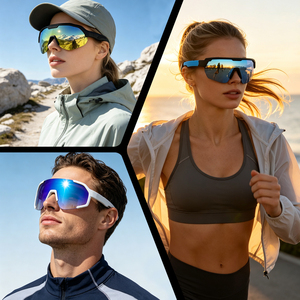
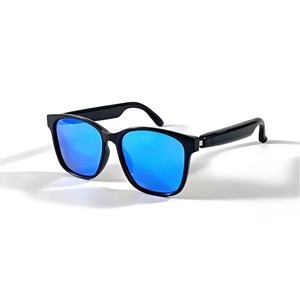
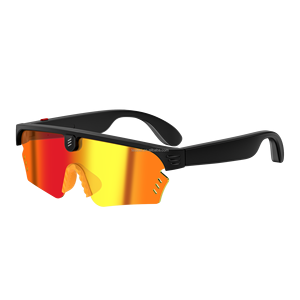
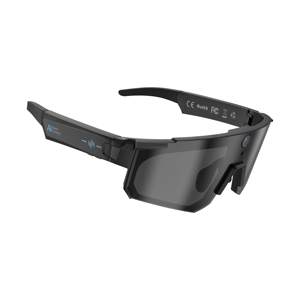
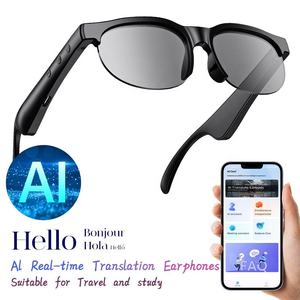
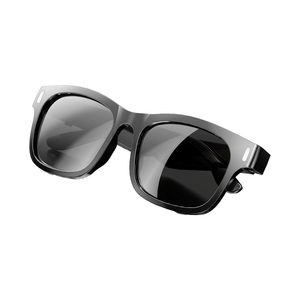
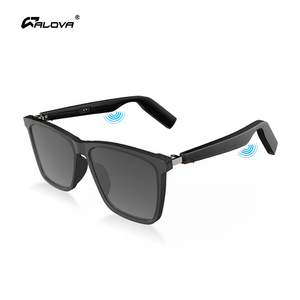
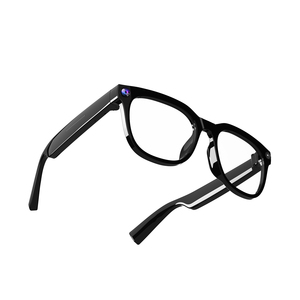
The global luxury and performance sunglasses sector is undergoing a structural technological paradigm shift. Traditional static dark lenses and passive UV photochromic solutions are rapidly giving way to active electrochromic tint modulation and specialized high-contrast spectrum engineering. Brands and B2B buyers looking for a competitive edge must understand that modern consumers demand instant adaptability, real-time optic customization, and seamlessly integrated smart electronics.
As a leading Custom OEM Contrast Sunglasses Factory & Supplier, our engineering division combines Japanese optical lamination expertise with micro-electronic power optimization. By sandwiching micro-thin electrochromic liquid crystal layers between high-impact optical polycarbonate, we achieve instantaneous Visible Light Transmission (VLT) shifts ranging from 65% down to 4% in less than 100 milliseconds.
For decades, photochromic lenses were the standard for light-adaptive eyewear. However, photochromic optics suffer from fundamental physical limitations: slow chemical response times (often taking 60 to 180 seconds to clear up indoors), inability to darken inside UV-blocking automobiles, and severe degradation under hot ambient temperatures. In contrast, electrochromic high-contrast lenses operated via capacitive frame touch or auto-sensors deliver immediate control regardless of ambient UV or temperature levels.
| Optic Feature Parameter | Legacy Photochromic Lenses | Next-Gen OEM Electrochromic Optics |
|---|---|---|
| Transition Speed (Dark to Clear) | 60 – 180 Seconds (Slow) | < 0.1 Second (Instantaneous) |
| In-Car Tint Activation | Fails (Glass blocks UV required for reaction) | 100% Functional (Driven by low-voltage pulse) |
| Temperature Sensitivity | High (Fails to darken in hot weather) | Zero Impact (-20°C to +65°C operating range) |
| Spectrum & Contrast Tuning | Generic Grey/Brown darkening | Selective Wavelength Amplification (Turf/Road/Water) |
| User Control Interface | None (Passive environmental) | Active Capacitive Touch / App / Sensor Auto-Tuning |
Contrast in optical terminology refers to the separation of visual wavelengths to heighten depth perception and edge resolution. Our proprietary high-contrast OEM lenses selectively attenuate specific visual bands—specifically filtering out background visual noise in the 480nm–580nm blue-green transition zone while boosting red and yellow clarity. This optical tuning is critical for high-velocity applications such as cycling, golf, maritime navigation, and professional sports where visual reaction speed directly influences athlete safety and performance.
As global retail buyers and brand managers evaluate their product roadmaps for upcoming seasons, three macro sourcing trends dominate the eyewear hardware supply chain:
Consumers no longer want to choose between premium eye protection and audio connectivity. Integrating directional air-conduction micro-speakers directly into temple architecture allows users to remain environmentally aware while enjoying HD calls, music, and AI voice navigation.
Moving beyond simple light-to-dark VLT shifts, the next wave of luxury eyewear features electronic color switching (e.g., shifting dynamically between tint palettes such as Ruby Fire, Electric Blue, and Emerald Clear) within a single physical frame build.
B2B markets are demanding prescription-ready smart frames (such as our Aura Rx platform). OEM designs must accommodate inner sub-frames or corrective optical inserts so vision correction remains unaltered while the outer electrochromic lens layer modulates tint.
According to recent industry forecasts, smart contrast eyewear is projected to achieve a Compound Annual Growth Rate (CAGR) exceeding 18.6% through 2030. Brands that deploy custom OEM lines today gain early-mover authority, securing high gross margins while establishing strong product differentiation against standard commodity injected eyewear.
Operating as an end-to-end original equipment manufacturer, our facility houses cleanroom lamination suites, automated surface-mount electronic assembly lines, and rigorous optical testing laboratories. We provide global brand partners with turnkey manufacturing services—from industrial design concept drawings to finished packaged goods ready for retail distribution.
Engineered in collaboration with Japanese optical technicians, our multi-layer film bonding prevents delamination, moisture intrusion, and optical distortion even under high thermal stress.
In-house CNC mold manufacturing and rapid 3D sample prototyping allow us to deliver custom frame samples in as few as 14 business days, significantly reducing time-to-market.
Every production batch undergoes 100% UV400 spectral verification, drop-ball impact testing (ANSI Z87.1 / ISO 12312-1), IPX4/IPX5 moisture chamber exposure, and battery safety cycling.
Direct technical answers to key questions raised by procurement managers, optical buyers, and product developers.
Our standard OEM baseline MOQ starts at 500 units per frame style for existing platform geometries with custom logo branding and colorways. For fully custom ODM frame mold creation, industrial tooling, and bespoke electronic firmware, typical production minimums start at 1,000 to 2,000 units depending on technical complexity.
Unlike continuous-drain electronic hardware, our electrochromic liquid crystal stack consumes power almost exclusively during the active state change (tinting or clearing up). Once a tint level is selected, power consumption drops to near zero micro-amps. A compact 85mAh to 110mAh lithium-polymer temple battery typically lasts up to 48–7 days of tint switching or 6–8 hours of continuous Bluetooth audio playback, re-charging in roughly 80 minutes via magnetic quick-connect pins.
Yes. All eyewear engineered in our facility complies with international standards including US ANSI Z80.3 & ANSI Z87.1 (impact resistance), European EN ISO 12312-1 (eye and face protection), Australian AS/NZS 1067, and international CE / FCC / RoHS / REACH micro-electronic safety certifications.
Yes. We offer specialized internal Rx carrier clip systems as well as custom dual-lens lamination options. This allows end-users with myopia or astigmatism to fit custom corrective prescriptions directly behind the primary electrochromic high-contrast outer shield without affecting tint response.
VLT ranges are fully configurable during OEM manufacturing. For golf and field sports, we recommend a dynamic VLT swing of 63% (cloudy/early morning) to 17% (full sun). For intense marine, snow, or dessert high-glare environments, we engineer lifestyle and shield optics reaching down to 4% VLT (Category 4 ultra-dark protection) with integrated 100% UV400 polarization.
Our frames utilize ultrasonic housing seals, hydrophobic micro-mesh speaker grilles, and conformal nano-coatings across internal PCBA circuit boards. All current sport platforms carry certified IPX4 or IPX5 water-resistance ratings, guaranteeing survival against intense sweat, heavy rain storms, and splashes.
We provide full white-label and private-label customization: laser-engraved lens branding, custom temple inlay badges, bespoke Bluetooth pairing names, custom companion iOS/Android software integration, soft microfiber pouches, and premium branded hardshell EVA zipper cases.