4.7★ / 9,201 Reviews · 100K+ Customers · TIME Best Invention · Fast & Free Shipping

High-yield, scalable smart frames featuring active electrochromic tinting, custom open-ear Bluetooth acoustics, and AI voice interfaces. Available for turn-key private label customization.

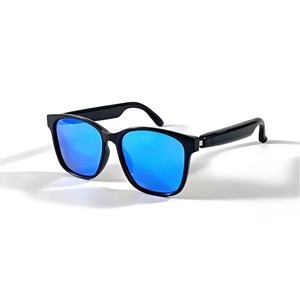
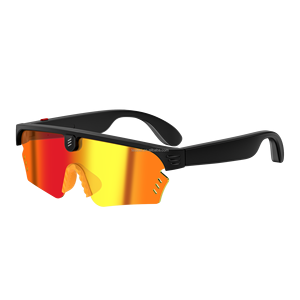


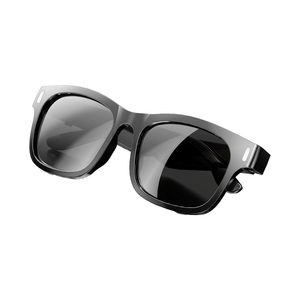
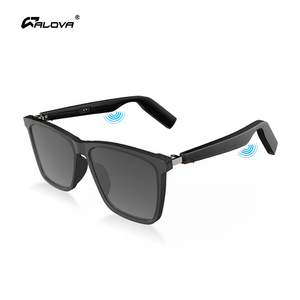
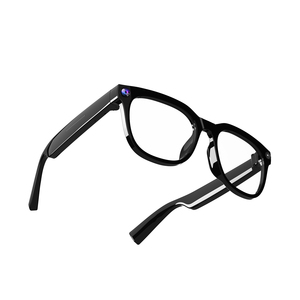
An in-depth industrial technical report covering electrochromic (EC) lamination processes, active tinting physics, acoustic micro-driver integration, and turnkey B2B procurement strategies.
Unlike traditional photochromic lenses that rely on ambient ultraviolet (UV) radiation to trigger slow chemical darkening—often lagging up to several minutes during temperature fluctuations—active Electrochromic (EC) technology utilizes micro-voltage electrical excitation to manipulate molecular orientation in real time. Within an electrochromic film assembly, an ultra-thin layer of guest-host liquid crystals or organic polymers is vacuum-laminated between conductive Indium Tin Oxide (ITO) coated substrate layers.
When the internal capacitive micro-controller delivers a low-voltage pulse (typically under 3.3V DC), the ion alignment shifts instantly. This alters the Visible Light Transmission (VLT) profile across controlled spectra from 65% down to 4% in under one second. For Prismatic™ multi-color optics, multi-layered EC stacks enable users to switch between distinct visual hue states (e.g., clear, amber, deep red, blue tint) without mechanical lens replacement.
Modern B2B smart eyewear requires precision convergence of optical clarity and miniaturized hardware. Our OEM manufacturing platforms integrate custom air-conduction open-ear speaker channels directly into lightweight TR90 or high-grade acetate temple frames. Using directional beamforming sound ducts, audio is projected straight toward the acoustic canal, minimizing sound leakage while preserving situational awareness for outdoor environments.
Power management is engineered with ultra-low consumption micro-controller units (MCUs) and magnetic quick-connect charging blocks. Because electrochromic films consume static electrical power only during state transitions (switching tint states), operational battery lifespans easily surpass standard smart audio glasses, delivering multi-day tint functionality and up to 8 hours of continuous Bluetooth 5.3 playback.
A comparative evaluation between conventional optical lens technologies and next-gen Electrochromic / Prismatic active tint systems manufactured in our specialized ISO certified facilities.
| Optical Technology Parameter | Passive Photochromic (TAC/Polycarbonate) | Fixed Polarized (Category 3) | Electrochromic (EC) Active Tint | Prismatic™ Multi-Color Electrochromic |
|---|---|---|---|---|
| Switching Latency | 30 sec – 5 min (UV Dependent) | Static (No Switch) | < 0.1 sec to 1.0 sec | < 0.5 sec (Instant Tap) |
| VLT Control Range | ~85% to 18% (Temperature Dependent) | Fixed ~12% - 15% | Stepless 65% down to 4% | Multi-state (4 distinct colors) |
| Temperature Sensitivity | High (Fades poorly in heat) | None | Zero (Electrical Voltage Control) | Zero (Electrical Voltage Control) |
| UV400 / Blue Light Protection | 100% UV Protection | 100% UV Protection | 100% UVA/UVB + High Energy Blue | 100% UVA/UVB Defense |
| Rx Prescription Adaptability | Standard Single/Progressive | Standard Single/Progressive | Dual-Layer Laminated Substrate | Dual-Layer Laminated Substrate |
| B2B Market Position | Commoditized Legacy | Standard Consumer Base | Premium Smart Wearable Sector | Cutting-Edge Innovation Flagship |
As the consumer electronics and optical luxury sectors converge, sourcing requirements for global distributors, retail chain buyers, and hardware brands are undergoing fundamental structural shifts. Key insights driving 2025–2030 supply chain planning include:
Standalone sunglasses and Bluetooth earphones are rapidly unifying into singular wearable architectures. B2B buyers must partner with manufacturers capable of delivering both high-precision optical lamination and micro-acoustics expertise under one factory roof.
End consumers demand optics that adapt dynamically to sudden illumination changes—such as moving from direct sunlight into tunnels, shaded trails, or indoor spaces. Static tint lenses are losing market share to active capacitive electrochromic tint frames.
Strict international e-waste and sustainability legislation requires smart frames with modular component assemblies. Our OEM tooling allows simple temple clip replacements, recyclable TR90 chassis separation, and eco-conscious packaging compliance.
Combining decades of optical precision engineering with state-of-the-art micro-electronics manufacturing, our facilities empower global brands to launch groundbreaking smart eyewear products efficiently.
Our electrochromic film bonding is conducted inside strict ISO Class 7 cleanrooms. Zero-dust atmospheric conditions ensure 99.85% defect-free lamination without micro-bubbles, optical haze, or localized VLT distortion.
Every frame undergoes automated 100% spectral photometry testing, IPX5 water spray chamber testing, 50,000-cycle temple hinge stress testing, and high/low thermal shock resistance evaluations (-20°C to 65°C).
From initial industrial design (ID) rendering and 3D prototyping to custom PCB layout, firmware programming, app SDK integration, and molded tooling, we provide end-to-end turn-key manufacturing service.
Comprehensive answers regarding minimum order quantities, customization parameters, international optical certifications, and supply chain logistics.
Consult with our lead optical engineers and supply chain specialists to request technical datasheets, request OEM sample units, or schedule a virtual factory inspection.