4.7★ / 9,201 Reviews · 100K+ Customers · TIME Best Invention · Fast & Free Shipping

Factory-direct smart goggles and audio sunglasses engineered for high-performance sports, driving, and tactical applications.
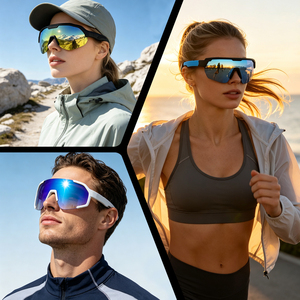
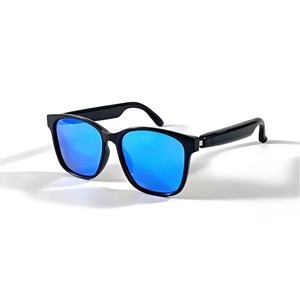
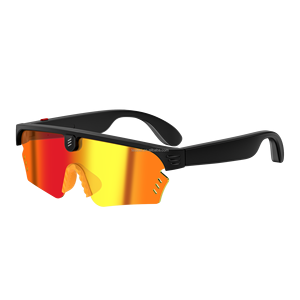
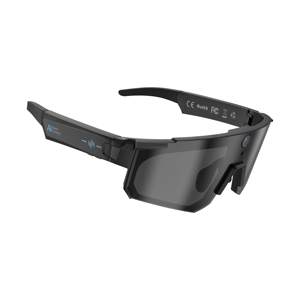
How premier Chinese smart eyewear factories integrate electrochromic chemistry, micro-acoustics, and automated assembly line standards.
Unlike standard photochromic lenses that rely on slow UV chemical reactions, our OEM factories utilize ultra-thin electrochromic (EC) film technology. Controlled via low-voltage electrical signals, lenses change Visible Light Transmission (VLT) instantly from clear to deep tint in under 0.1 seconds.
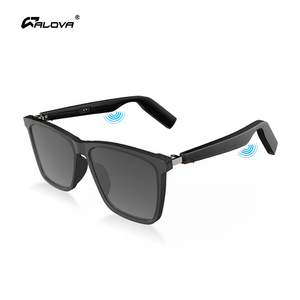
Integrating customized air-conduction speakers and dual noise-canceling beamforming microphones into lightweight TR90 temples. Acoustic cavity designs minimize sound leakage while providing crystal-clear hands-free calling, music streaming, and AI voice assistance during outdoor sport training.
All active electronic frames maintain strict IPX4 and IPX5 water resistance. Internal micro-PCBs are coated with conformal nano-hydrophobic layers, ensuring immunity against heavy sweat, rainfall, and intense motion during competitive athletics or outdoor driving.
The global wearable device ecosystem is experiencing a massive paradigm shift. As traditional eyewear converges with consumer electronics, consumer demand has transitioned from basic polarized sun protection to dynamic, multi-functional smart glasses and goggles. Leading this revolution are specialized smart goggles factories in China that combine precision optical lamination, electrochromic science, micro-acoustic spatial design, and artificial intelligence integration.
For international buyers, brand owners, enterprise optical distributors, and tech importers, navigating China’s smart goggles supply chain requires a granular understanding of core manufacturing technologies, quality assurance benchmarks, regulatory compliance, and future hardware trends. This comprehensive OEM/ODM guide details the technical parameters necessary to evaluate top-tier China manufacturing partners.
The core value proposition of next-generation smart goggles lies in dynamic lens transmission control. Chinese OEM factories currently produce three primary variable-tint optic platforms:
Advanced electrochromic sport shield platforms—such as those reviewed and validated by renowned sports team doctor Dr. Jay Schwartz (consultant for NBA and MLB teams)—are engineered to block 100% of UVA/UVB rays while fine-tuning contrast across dynamic turf, fairway, and asphalt environments. Proper VLT tuning prevents visual fatigue and optimizes optical clarity under fluctuating solar angles.
Integrating acoustic drivers into eyewear temples without compromising frame aesthetics or center of gravity demands advanced micro-engineering. Premier China factories leverage air-conduction cavity designs with reverse-phase acoustic cancellation. This minimizes sound leakage by up to 85% compared to open-air speaker setups, allowing private audio calls and navigation prompts even in quiet indoor environments.
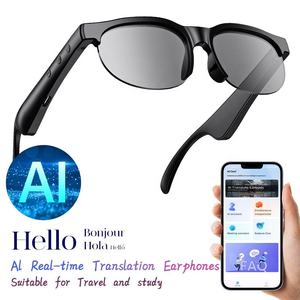
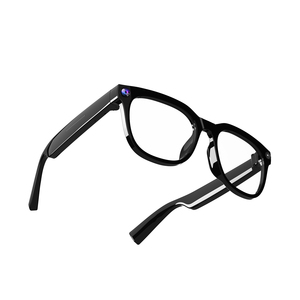
With the integration of low-power SoC chips, smart camera glasses capture 1080p HD video and high-resolution photography while interfacing via Bluetooth 5.3 with mobile AI engines. Dual microphone arrays with beamforming noise suppression extract voice inputs for real-time speech translation, voice assistant queries, and heads-up navigation guidance.
To maintain market competitiveness, global brand buyers must align their procurement roadmap with key technological evolutions emerging from leading Chinese manufacturing hubs:
When auditing potential China smart goggles factories, B2B procurement managers should evaluate the following critical factory competencies:
Because electrochromic films and polarized TAC layers are sensitive to airborne particulates, optical lamination must occur within ISO Class 7 (Class 10,000) or cleaner cleanroom environments. Micro-dust contamination results in optical distortion, film bubbling, and elevated defect rates.
Reputable OEM suppliers subject production batches to strict reliability testing, including:
Essential insights for importers, OEM clients, and enterprise buyers sourcing smart eyewear from China.
Standard RTS (Ready-to-Ship) private-label orders generally start at 100 to 500 units. For full OEM custom mold creation, customized Bluetooth firmware, bespoke frame colorways, and proprietary packaging, MOQs typically range from 1,000 to 3,000 units per model.
Electrochromic lenses manufactured in ISO-certified cleanrooms are fully sealed inside protective optical polycarbonate layers. They block 100% of UVA/UVB rays and feature scratch-resistant, hydrophobic coatings, delivering a functional lifespan exceeding 50,000 tint cycles without optical degradation.
Top China factories maintain comprehensive international compliance, including CE, FCC, RoHS, REACH, UN38.3 (for lithium battery air/sea transit safety), and FDA registration for optical frame distribution in North America.
Yes. Specialized OEM builds feature dedicated optical prescription inner frames or direct Rx lens edge-bevel lamination, allowing end users to fit custom prescription single-vision or progressive optics while maintaining active tint control and audio functionality.
Electrochromic tint technology consumes micro-power only during state transitions (<1 second switch), consuming zero battery while holding a static tint state. Integrated lithium-polymer batteries provide up to 6–8 hours of continuous audio playback or days of tint switching on a single charge.
Sample validation for existing tooling takes approximately 5–7 working days. Customized frame sampling with custom logos and firmware takes 15–20 days. Mass production lead times typically range from 30 to 45 days upon artwork and sample sign-off.
Scale your brand with patented electrochromic technology, award-winning industrial design, and ISO-certified factory supply chain solutions. Request tech datasheets, sample kits, or customized wholesale quotes today.