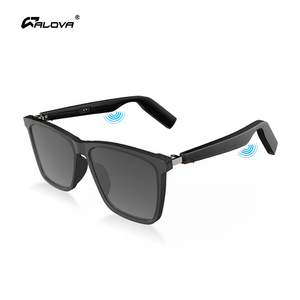
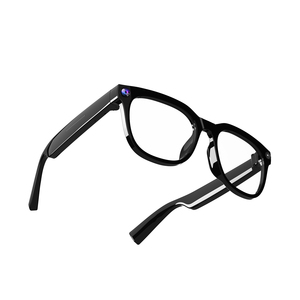
Top Trusted Digital Glasses Factory & Exporter

Global OEM/ODM Pioneer in Electrochromic Optics, Directional Open-Ear Audio, and AI-Powered Smart Eyewear Engineering

Flagship B2B Digital Eyewear Products

High-yield electronic optical wearables engineered for international distributors, brand owners, and enterprise procurement partners.

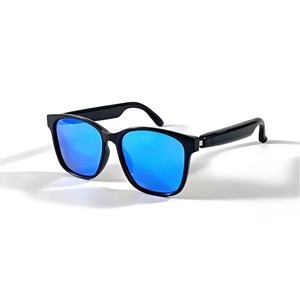
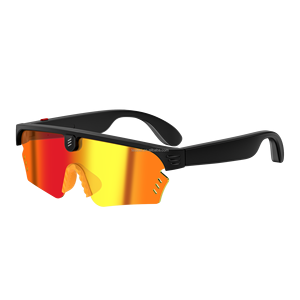
Polarized UV400 Smart Glasses Voice Control Outdoor Driving Audio Sunglasses
Polarized UV400 Smart Glasses Voice Control Handsfree Call Outdoor Sport Driving Audio Sunglasses
Contact Us
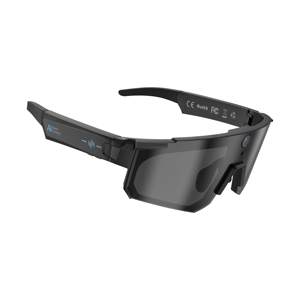
AI Smart Audio Glasses Voice Assistant Navigation Anti-Blue Light IPX-5
AI Smart Audio Glasses Voice Assistant Navigation HD Music Call Headset Polarized Lenses Anti-Blue Light Touch-Based IPX-5
Contact Us
Smart Wireless Sunglasses Headphones Audio Headsets Touch Control Cycling Glasses
Hot Sale Low Price Smart Wireless Sunglasses Headphones Audio Headsets Music Call Driving Glasses Touch Control Cycling Glasses
Contact Us
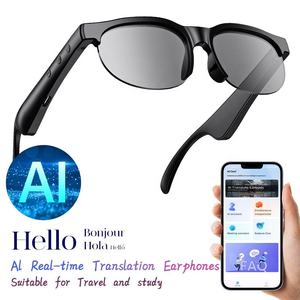
Smart AI Camera Glasses with Video Recording Bluetooth Audio Real Time Translation
Smart AI Camera Glasses with Video Recording Bluetooth Audio Music Playback Voice Assistant Real Time Translation Sunglasses
Contact Us
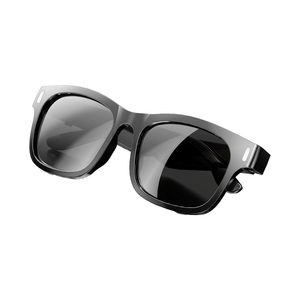
Men Women Smart Glasses Wireless Sunglasses Touch Voice Assistant AI Smart Translator
Men Women Smart Glasses Wireless Sunglasses Built-in Microphone Speakers Touch Voice Assistant AI Smart Translator Glasses Gafas
Contact Us
Smart Audio Cycling Glasses 5.3 Voice Assistant AI Translation Magnetic Charging
Smart Audio Cycling Glasses 5.3 Voice Assistant Music Calling AI Translation UV Protect Wearable Devices Magnetic Charging Touch
Contact Us
ALOVA Air Conduction Earphone Glasses with Speaker Wireless Bluetooth Smart Audio Headphone
ALOVA Air Conduction Earphone Glasses with Speaker Wireless Bluetooth Smart Audio Headphone Sunglasses
Contact Us
Smart Photochromic Glasses Bluetooth Air Conduction Music Calling Game Navigation Eyewear
Smart Photochromic Glasses Bluetooth Air Conduction Music Calling Game Navigation Wearable Fashion Audio Eyewear
Contact Us
12M+
Annual Unit Capacity
< 0.1s
EC Tint Switch Speed
ISO9001
Cleanroom Manufacturing
65+
Global B2B Export Markets

1. Strategic Executive Summary: The Industrial Evolution of Digital Glasses

The global wearable technology ecosystem is undergoing a structural paradigm shift. Traditional static optical eyewear is rapidly transitioning toward dynamic, connected digital glasses platforms. As a premiere digital glasses factory and tier-1 exporter, our engineering facilities integrate micro-electrochromics (EC), directional acoustic waveguides, embedded neural processing units (NPU) for real-time AI translation, and low-power Bluetooth 5.3 System-on-Chip (SoC) architectures.

Modern global buyers—ranging from telecommunication operators and consumer electronics brands to luxury eyewear chains—no longer view smart glasses as niche novelty items. According to recent optical manufacturing whitepapers, the smart audio and tint-adjustable eyewear market is expanding at a CAGR exceeding 24.6% through 2030. Sourcing executives require industrial manufacturing partners capable of delivering tight optical tolerances, high electrochromic liquid crystal stability, pristine acoustic isolation, and scalable OEM/ODM firmware customization.

Information Gain Insight: Unlike legacy photochromic lenses (which rely on UV intensity and react slowly over 60–180 seconds), modern dynamic electrochromic (EC) film stacks operate via low-voltage ion switching across conductive ITO layers, reaching full tint transition in under 0.1 seconds regardless of ambient temperature.

Our OEM/ODM manufacturing footprint bridges the gap between high-precision optical lab standards and high-volume electronics assembly lines. By consolidating optical lamination, SMT circuit integration, acoustic chamber tuning, and IPX4-IPX5 waterproof sealing under one roof, we eliminate supply chain fragmentation for enterprise exporters worldwide.

Core Architectural Engineering Pillars

Hardware innovations that define our factory's competitive edge in the global smart eyewear supply chain.

Electrochromic (EC) Lamination
Multi-layer PET-ITO molecular switching films providing instant VLT adjustment from 65% down to 4% with zero power draw in static tint states.
Directional Air Conduction Audio
Dual micro-speaker acoustic cavities engineered with inverse phase cancellation to deliver rich audio while reducing reverse sound leakage by over 88%.
AI Voice & Real-Time Translation
Dual ENC beamforming microphones paired with embedded low-latency SoCs supporting real-time cross-lingual voice translation and AI assistant triggers.

2. Future Sourcing & Procurement Trends in Digital Eyewear (2025–2030)

Global optical procurement directors must align their product development roadmaps with emerging hardware capabilities. Based on deep analysis of supply chain dynamics, consumer search intent, and factory production metrics, four key procurement trends are dominating the B2B digital glasses domain:

A. Shift from Static UV Protection to Dynamic Electrochromic (EC) Optics

Conventional fixed tint (Category 2 or Category 3) sunglasses create visual discomfort when wearers move between bright daylight and shaded environments. Photochromic chemical lenses adapt too slowly and are heavily influenced by temperature. Modern buyers are demanding electrochromic tap-to-tint or slider-controlled lenses. As a leading manufacturer, our patented Eclipse™ and Prismatic™ multi-color EC film tech enables users to change lens tint or color palettes instantly, opening immense commercial opportunities in cycling, driving, golf, and fashion retail.

B. Convergence of Open-Ear Acoustics with Smart Ergonomics

Consumers reject bulky, heavy smart frames. Sourcing trends prioritize lightweight TR90 memory polymers paired with ultra-thin titanium alloy hinges. By integrating miniaturized directional air-conduction speakers inside temple arms, modern digital glasses replace invasive in-ear earbuds. This ensures situational awareness during outdoor athletic pursuits while keeping frame weights under 38 grams.

C. Universal Prescription (Rx) Integration

Over 55% of global adults require vision correction. Historically, smart eyewear failed to capture mass adoption because prescription lenses could not be easily fitted over electronic substrates. Our factory's modular inner Rx frame mounts and rimless Aura Rx lamination techniques allow opticians to cut standard single-vision or progressive corrective lenses without damaging the active electrochromic matrix embedded in the outer lens.

Technology Vector Legacy Smart Eyewear Factory Next-Gen Standard (Chamelo/Ohte Tech)
Tint Switching Mechanism Chemical Photochromic (60s – 3 mins) Electrochromic PET-ITO Film (< 0.1s Instant)
Audio Transducer Architecture Standard Micro-Speakers (High Sound Leakage) Directional Air Conduction + Dual Phase Noise Cancellation
Weight Distribution 55g – 80g (Front Heavy) 35g – 42g (Ergonomic Balanced Balance Point)
Prescription (Rx) Compatibility Non-compatible / Rigid Bonded Modular Rx Adapter Mounts & Rimless Substrate Lamination
Ingress Protection Rating IPX2 (Sweat Vulnerable) IPX4 / IPX5 Nano-Coated Circuit Water Resistance

D. AI Hardware Integration at the Edge

With the rise of Large Language Models (LLMs) and voice-first AI agents, digital glasses are becoming the primary hands-free interface. Incorporating dual-beamforming ENC microphones and energy-efficient Bluetooth 5.3 SoCs allows seamless connectivity to cloud translation engines, real-time voice assistance, and acoustic navigation prompts without draining battery life.

3. Technology Roadmap: Molecular Lamination & Precision Manufacturing

Achieving optical clarity, durability, and electronic longevity in digital glasses requires strict adherence to cleanroom manufacturing standards. At our automated production facility, every pair of glasses undergoes rigorous multi-stage assembly:

Factory Quality Standard: Cleanroom Class 10,000 lamination prevents micro-dust particles from disrupting electrochromic film alignment, maintaining an optical haze index below 0.5% and light transmittance uniformity above 98%.

A. Micro-Electrochromic Stack Physics

Our patented electrochromic film consists of an active organic electrochromic layer sandwiched between transparent Indium Tin Oxide (ITO) conductive substrates. When a low DC voltage (~1.5V to 3.0V) is applied via capacitive touch sensors or temple buttons, lithium ions migrate across the electrochromic matrix. This alters the light absorption spectrum across visible wavelengths instantly. When static, the system consumes zero micro-amperes, allowing tint-only models to operate for over 100 days on a single 90mAh magnetic charge.

B. Precision Acoustic Waveguide Engineering

To eliminate audio leakage—a major pain point in B2B smart audio eyewear—our acoustic engineers utilize dual-port resonant cavities. Sound waves emitted from the primary speaker port travel toward the ear canal, while equal-and-opposite acoustic waves are released from secondary cancellation ports. This destructive interference drastically reduces acoustic spillover, ensuring private calls even in quiet indoor offices.

C. Environmental & Mechanical Stress Testing Protocol

As a certified global exporter, our quality assurance laboratoryubjects every production batch to rigorous reliability testing:

  • Thermal Shock Chamber: Temperature cycling from -20°C to +65°C to guarantee electrochromic film stability across extreme climates.
  • Sweat Corrosion Endurance: Continuous 48-hour salt spray exposure on conductive charging contacts and hinges.
  • Hinge Flexing Fatigue Test: 20,000 cycles of automated temple opening and closing to verify structural integrity.
  • Water Submersion & Spray: IPX4 and IPX5 high-pressure water jet validation for active sports applications.

4. Strategic Factory Advantages for Global Enterprise Buyers

Selecting the right digital glasses factory is critical for brand success. Our manufacturing facility combines deep optical R&D heritage with modern consumer electronics mass production capabilities:

Fully Integrated Supply Chain
In-house tooling, injection molding, cleanroom lens lamination, SMT surface mounting, and final acoustic tuning eliminate third-party markup and lead-time delays.
Global Regulatory Compliance
All products carry full CE, FCC, RoHS, REACH, FDA registration, and UN38.3 battery shipping certifications for seamless international customs clearance.
Flexible OEM/ODM Customization
From custom VLT dynamic range tuning and bespoke frame colorways to custom Bluetooth pair names and companion app SDK integration.

Whether you are launching an athletic high-wrap sports shield line with electrochromic tint control or a luxury fashion optical range with open-ear Bluetooth audio, our engineering team offers end-to-end design, rapid prototyping, mass manufacturing, and customized retail-ready packaging.

Frequently Asked Questions (B2B Sourcing FAQ)

Comprehensive answers to common technical, manufacturing, and commercial procurement inquiries.

Q1: How does your factory's electrochromic (EC) lens technology differ from standard photochromic lenses?
Our electrochromic (EC) technology relies on electronic ion migration driven by low voltage inside a laminated ITO film matrix, altering lens darkness in under 0.1 seconds at the touch of a button or temple slider. Photochromic lenses rely on chemical reactions triggered by outdoor ultraviolet (UV) light, taking anywhere from 60 seconds to several minutes to darken and lighten. Furthermore, photochromic lenses fail to darken inside cars because windshields block UV light, whereas our EC lenses function perfectly in any ambient lighting environment.
Q2: What is the minimum order quantity (MOQ) for OEM/ODM custom branding?
For standard inventory wholesale orders, our MOQ starts as low as 50 units per SKU. For custom OEM branding (logo laser engraving, custom frame colors, tailored packaging, and custom Bluetooth firmware configuration), the standard MOQ is typically 500 to 1,000 units per model. We also offer prototype tooling and sample trial production packages for qualified brand partners.
Q3: Are your digital smart audio glasses waterproof for outdoor sports and rainy conditions?
Yes. All current generation electronic platforms feature IPX4 or IPX5 water resistance ratings. Circuit boards inside the temple arms are treated with hydrophobic nano-coatings, and mechanical joints utilize silicone seals. This protects internal audio drivers, micro-controllers, and lithium batteries from intense sweat, rain, and accidental water splashes during cycling, running, or golf.
Q4: How can prescription (Rx) lenses be integrated into your smart eyewear designs?
We offer two prescription-ready architectures. First, platforms like Aura Rx utilize a rimless dual-layer structural design where corrective single-vision, progressive, or reading lenses are mounted directly behind the active electrochromic matrix layer. Second, our sport shield series includes detachable inner magnetic or clip-on Rx rim inserts. This enables opticians and optical retailers to glaze custom prescriptions without specialized electronic lens edging equipment.
Q5: What battery performance and charging protocols do your glasses utilize?
Our digital glasses utilize high-density lithium-polymer micro-batteries (typically 80mAh to 120mAh total capacity distributed symmetrically across both temples for weight balance). Tint-only frames operate for weeks on a single charge because power is only consumed during active switching. Audio-enabled models provide 6.5 to 8 hours of continuous music playback or call time. Charging is handled via fast magnetic pin connectors, reaching 80% charge capacity in approximately 45 to 60 minutes.
Q6: What international safety and optical standards do your export shipments comply with?
Every export batch complies with ANSI Z80.3 (optical radiation and impact resistance), ISO 12312-1 (eye and face protection), CE EN166, FCC Part 15B (electromagnetic compatibility), RoHS 2.0 (hazardous substance restrictions), and FDA registration standards for USA import. Battery safety is backed by MSDS, UN38.3, and IEC 62133 certifications.
Q7: What is the typical lead time for production and global export shipping?
Standard OEM inventory sample dispatch takes 2 to 5 business days. Mass production for customized orders generally requires 25 to 35 calendar days following tooling and golden sample sign-off. We partner with leading international freight forwarders to provide DDP, FOB, or CIF air and sea freight options directly to your regional distribution warehouses.

Partner with the World's Leading Digital Glasses Factory

Request full product technical specification catalogs, optical benchmark test reports, and factory-direct OEM/ODM pricing tiers today.

Contact Us