4.7★ / 9,201 Reviews · 100K+ Customers · TIME Best Invention · Fast & Free Shipping

Explore our flagship OEM/ODM wearable platforms, engineered with sub-second liquid crystal electrochromic (EC) thin-films, prescription optical compatibility, and high-fidelity directional audio.

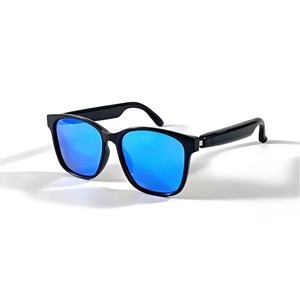
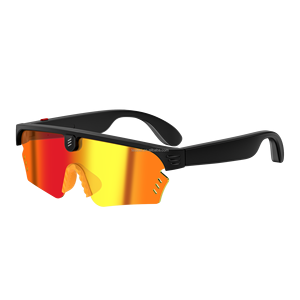
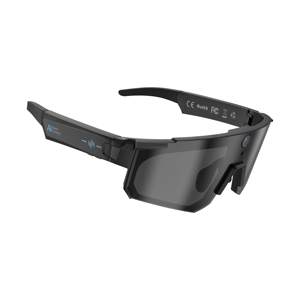

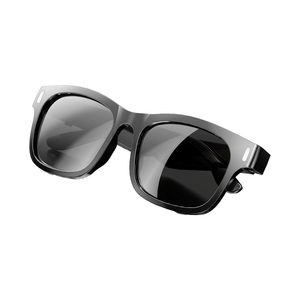
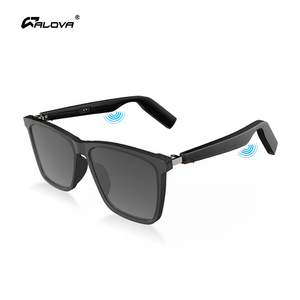
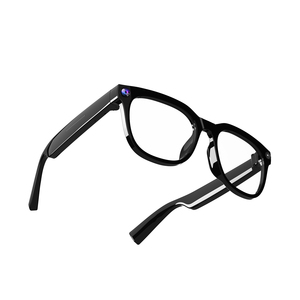
Why traditional chemical photochromic (UV-dependent) optics are giving way to solid-state, voltage-controlled electrochromic thin-film assemblies in premium wearable devices.
Legacy photochromic lenses (e.g., traditional silver halide transitions) depend entirely on ambient UV intensity and temperature. They transition slowly (30 to 120 seconds) and fail inside UV-blocking vehicles. Modern Electrochromic (EC) factories laminate nanometer-thin conductive polymer or liquid crystal films between optical polycarbonate layers. Applying micro-voltage (typically 1.2V to 3.0V) reorders molecular alignment in under 0.1 seconds, granting total tint control independent of UV radiation.
First-generation smart glasses were limited to binary on/off darkening (gray or brown). Advanced factories now produce Prismatic™ multi-layer EC matrices. By stacking micro-encapsulated dichroic electrochromic films with independent conductive traces, wearers can switch between four distinct lens color profiles (e.g., Amber, Violet, High-Contrast Ruby, Dark Neutral) via temple capacitive sliders or smart device companion apps.
| Optical Technology | Activation Mechanism | Transition Speed | In-Car Operation | Power Draw | Optical Clarity (HAZE) |
|---|---|---|---|---|---|
| Electrochromic (EC) Thin-Film | Low-Voltage Pulse (1.5V DC) | < 0.1 to 0.8 Seconds | 100% Functional | Ultra-Low (<0.5mA during shift) | < 0.5% (Crystal Clear) |
| Liquid Crystal (PDLC / TN) | AC Voltage Alignment | < 0.05 Seconds | 100% Functional | Continuous Power Consumption | 1.5% - 3.0% (Slight Haze) |
| Traditional Photochromic | Ambient UV Solar Radiation | 45 - 180 Seconds | Fails behind UV glass | Zero Electrical Power | < 0.3% |
Key technological shifts brand buyers, optical distributors, and OEM original equipment manufacturers must evaluate when auditing prospective factories.
Leading factories are moving away from multi-board discrete wiring. Modern B2B production lines embed the EC driver chip, Bluetooth 5.3/5.4 SoC, low-noise microphones, and power management ICs (PMIC) into a single flexible circuit board (FPC) encapsulated directly inside the TR90 or acetate temple arms. This minimizes failure rates from flexure fatigue and improves sweat isolation to IPX4 / IPX5 standards.
A major bottleneck for smart eyewear was prescription lens integration. Next-generation manufacturers utilize vacuum-bonding thermoforming lines to laminate the electrochromic film between a front protective hard-coated PC lens and a rear corrective ophthalmic prescription blank (supporting Single Vision, Progressive, and Reading powers from -6.00D to +4.00D).
Tint control is no longer isolated. High-tier suppliers now integrate dual directional acoustic micro-drivers that beam clear sound directly into the ear canal while suppressing sound leakage by up to 18dB. Coupled with integrated BLE micro-controllers, frames connect directly to cloud-based LLMs for real-time multilingual translation and voice navigation.
Evaluating cleanroom standards, lamination yield metrics, and structural seal integrity when selecting an OEM partner for smart electrochromic eyewear.
Electrochromic films are sensitive to airborne particulates and ambient moisture. Microscopic dust during lamination causes localized short circuits or permanent tint spotting ("pinholes"). Qualified factories operate ISO 7 (Class 10,000) cleanroom facilities equipped with automated optical inspection (AOI) machines to maintain yield rates exceeding 98.5%.
Moisture ingress causes degradation of electrochromic polymers, leading to edge-yellowing or dead tint zones. Top manufacturers employ patented ultraviolet (UV) curable hydrophobic barrier resins applied along the lens circumference, passing 500-hour environmental testing at 60°C and 90% relative humidity.
Quality assurance demands that every manufactured unit undergoes automated optical spectrophotometer testing across the 380nm–780nm light spectrum. Lenses must demonstrate consistent tint density across both left and right eye channels, maintaining exact Visible Light Transmission (VLT) matching (e.g., 63% ±1.5% unpowered to 17% ±1.0% fully powered).
Smart eyewear must function as certified protective eyewear. Factory standards require compliance with ANSI Z87.1 (US) and EN166 (EU) high-mass drop-ball impact specifications, ensuring the inner electronic substrates do not shatter or expose conductive layers under mechanical stress.
Clear, technical insights to help optical brand procurement managers navigate factory selection, regulatory compliance, and custom molding.
Electrochromic lenses consume power almost exclusively during the active state change (charging/discharging the capacitive film). For tint switching alone, a small 80mAh lithium-polymer battery can support over 1,500 tint transitions per charge. When combined with Bluetooth open-ear audio platforms, continuous playback ranges from 6.5 to 9 hours. Standard battery cells retain >80% capacity after 500 full charge cycles.
For existing factory tooling (using stock TR90, acetate, or titanium frame geometries with custom brand logo placement and CMF colors), standard factory MOQs range from 500 to 1,000 units per SKU. For completely original ODM industrial design tooling requiring new frame injection molds and custom optical film laser-cutting dies, the recommended initial order quantity is typically 2,000 to 3,000 units.
Comprehensive factories manage end-to-end certification testing prior to mass shipment. Complete electronic eyewear assemblies require CE, FCC, RoHS, and REACH documentation for electrical safety and hazardous substance restriction. The optical components carry FDA registration (Medical Device Class 1 / Spectacles) for entry into the United States, along with ISO 12312-1 sunglasses compliance.
Yes. Unlike liquid crystal displays (LCDs) which suffer sluggish response times in sub-zero environments, solid-state electrochromic polymer films maintain consistent switching performance from -20°C to 70°C. Factories specialized in high-wrap sports shields and ski goggles utilize dual-pane thermal barriers combined with anti-fog interior coatings.
Factory OEM packages generally include custom magnetic hard-shell EVA EVA protective cases, microfiber cleaning cloths woven with brand logos, custom magnetic pin-charging cables, user manuals in multiple languages, and retail-ready FSC-certified outer color boxes with anti-counterfeit serial numbers.
Every PCBA (Printed Circuit Board Assembly) undergoes automated inline testing: Acoustic Artificial Head Frequency Response testing, Total Harmonic Distortion (THD) checks (<1% target), ESD electrostatic discharge protection up to 8kV, and IPX4/IPX5 pressurized water jet chamber testing prior to final frame assembly.
Whether you are looking to source off-the-shelf smart audio frames, customize a proprietary electrochromic sport shield line, or license patented Prismatic™ tint-shifting technology, our engineering team is ready to consult on your technical specifications.
Contact Us