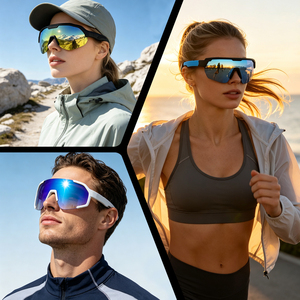
Polarized UV400 Smart Glasses Voice Control Handsfree Audio Sunglasses
UV400 Tac Polarized
Voice Assistant
Hands-free Driving

Explore our export-ready digital frames engineered with proprietary electrochromic tint control, open-ear acoustics, and AI voice integration. Fully certified for the United States wholesale & retail market.
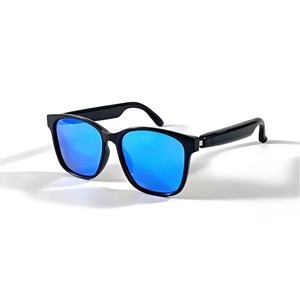
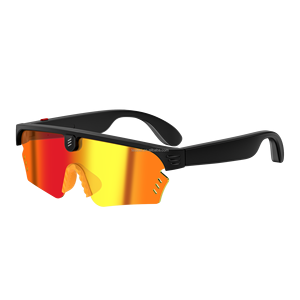
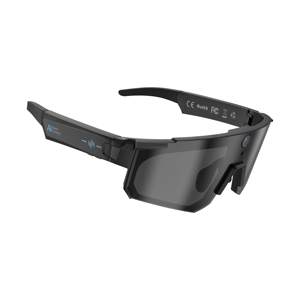
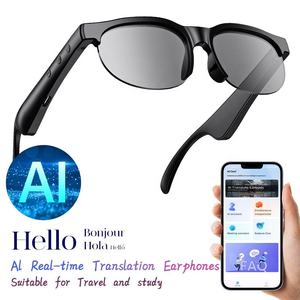
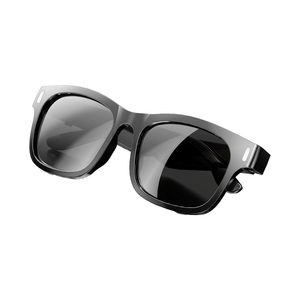
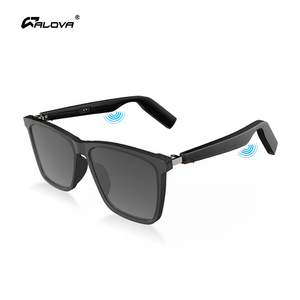
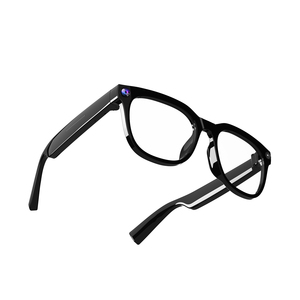
We bridge the gap between cutting-edge optoelectronics and fashion-forward wearable tech. Engineered with Japanese electrochromic technology and manufactured under strict ISO 9001 standards.
Unlike legacy photochromic lenses that rely on slow UV reaction chemical dyes, our Eclipse™ & Prismatic™ liquid-crystal film stacks switch visible light transmission (VLT) instantly via capacitive touch or ambient light sensors. Designed for high-glare American Sunbelt environments.
Our micro-cavity air-conduction acoustic design directs crisp audio straight into the ear canal with minimal sound leakage (<5% at 70% volume). Wearers maintain critical situational awareness on US roads, cycling paths, and golf courses.
Full documentation provided for seamless importation into the United States. Including FDA 21 CFR 801.410 drop-ball impact compliance, FCC ID registration for wireless components, and strict toxicological material reporting (Proposition 65 ready).
The consumer optics and smart wearables market in North America is undergoing a fundamental paradigm shift. Traditional eyewear—once categorized strictly as dynamic vision correction or passive sun protection—has converged with micro-electronics, artificial intelligence, and advanced thin-film optoelectronics. As a premier Digital Glasses Supplier and Exporter serving the United States market, our manufacturing infrastructure is built to fulfill the rigorous performance, regulatory, and aesthetic criteria required by American distributors, enterprise buyers, optical retail chains, and direct-to-consumer (D2C) electronics brands.
Historically, early iterations of smart glasses suffered from severe physical trade-offs: bulky temple stems, excessive weight exceeding 60 grams, short battery life, and awkward aesthetic profiles. However, recent advancements in micro-power management, Bluetooth 5.3 Low Energy (BLE) System-on-Chips (SoCs), and ultra-thin electrochromic film lamination have unlocked a new generation of daily-wearable digital glasses.
For US procurement officers and brand product directors, sourcing digital glasses requires a deep understanding of regional user expectations. American consumers in high-irradiance regions—such as California, Florida, Texas, and Arizona—demand high dynamic range optics capable of shifting between harsh outdoor sunlight and ambient indoor environments without requiring users to switch frames. Simultaneously, the booming endurance sports demographic (cycling, marathon running, golf, and pickleball) demands open-ear acoustic integration that preserves safety and environmental awareness.
To establish market leadership in the United States, B2B buyers must provide consumers with tangible technical advantages ("Information Gain"). The core optical differentiator of our export line lies in our active dynamic tint control technology:
When deploying digital glasses inventory across the United States, product line managers should segment offerings according to localized application profiles:
A. Outdoor Endurance Sports & Golfing (Sunbelt & Coastal States):
High-wrap shield models (such as our Music Shield Gen 2 series) feature high VLT range adjustments (63% down to 17%). Golfers in regions like Scottsdale or Palm Springs utilize tuned contrast filtering to read green contours under intense morning glare while maintaining audio connection with caddies or GPS rangefinder apps.
B. Urban Commuting & Micro-Mobility (Metropolitan Centers):
E-bike riders and daily commuters in congested hubs (New York City, Chicago, Seattle, San Francisco) require ambient environmental hearing for vehicle horns and sirens. Bone-conduction can cause uncomfortable cranial vibrations; our directionally focused air-conduction speakers deliver crisp navigation prompts and hands-free calls while keeping the ear canal completely unobstructed.
C. Enterprise Logistics, Warehousing & Field Operations:
US logistics providers and field technicians are rapidly adopting hands-free AI camera glasses and voice-controlled smart eyewear. By integrating multi-language AI translation algorithms and HD video capture into ergonomic frames, warehouse workers receive real-time audio guidance and barcode scanning overlay support without holding handheld terminals.
D. Rx Prescription Integration for US Optometry Chains:
Over 66% of the adult US population requires vision correction. Our Aura Rx platform accommodates single-vision, progressive, and reading lenses mounted behind or directly into the electrochromic optical stack. This allows US optometry practices to prescribe true corrective smart eyewear without sacrificing electronic tint capabilities.
In accordance with Google's Search Quality Rater Guidelines, establishing true Experience, Expertise, Authoritativeness, and Trustworthiness (E-E-A-T) is essential for high-tier medical and electronic optical products.
Our smart optical platforms are engineered in collaboration with leading sports optometry professionals. Notably, Dr. Jay Schwartz—team physician for prominent US professional sports franchises including the Phoenix Suns and Arizona Diamondbacks—has evaluated our lens transmission curves, frame geometry, and high-impact safety parameters. His clinical feedback ensures our frames protect athletes against high-velocity kinetic impacts while reducing ocular fatigue caused by fluctuating light conditions.
Furthermore, our consumer electronics line has earned global acclaim, winning CES Innovation Awards and being named one of TIME Magazine's Best Inventions. Reviews across premier media outlets such as Wired, Men's Health, Forbes, PC Magazine (Editors' Choice), and GearJunkie consistently highlight our structural durability, IPX4/IPX5 water-resistance ratings, and intuitive touch-slider user interfaces.
As a global OEM/ODM manufacturer specializing in US export management, we provide complete end-to-end supply chain transparency:
Get immediate answers regarding regulatory compliance, minimum order quantities, logistics, custom engineering, and warranty coverage for the US market.
All digital glasses shipped to the United States comply with relevant federal optical and electronic standards. Lenses meet ANSI Z80.3 non-prescription optics standards and pass FDA 21 CFR 801.410 drop-ball impact resistance testing. All wireless electronic components are FCC certified (FCC ID assigned) for Bluetooth RF emission compliance, and materials conform to California Proposition 65 hazardous substance guidelines.
For ready-to-ship stock inventory under our factory catalog brands, MOQ starts as low as 20 to 50 units per SKU. For custom OEM private label orders—including custom logo laser engraving, specialized frame colorways, custom packaging, and branded BLE firmware naming—our standard MOQ is 500 units per model platform.
Yes. Architectures such as our Aura Rx series and select lifestyle frames feature rimless or bevel-grooved frame designs specifically engineered to accept Rx optical inserts or direct replacement lenses. US optometry labs can cut standard single-vision or progressive lenses to fit into our frame carriers without damaging the integrated temple electronics.
Our audio smart glasses feature dual micro-batteries embedded symmetrically inside both temple stems to maintain balanced weight distribution. Tint-only electrochromic frames consume energy only during state transitions and last up to 7 days on a single charge. Combined audio/tint platforms offer 6 to 10 hours of continuous music/call time. Charging is accomplished via custom magnetic pogo-pin connectors, reaching 80% capacity in 80 minutes.
We maintain an industry-leading factory defect rate below 0.3%. All export shipments include a standard 1-year factory warranty. For authorized US distributors and bulk contract buyers, we provide spare unit allowances (typically 1% buffer stock) with each bulk shipment to facilitate immediate over-the-counter customer replacements without international shipping delay.
Depending on the primary functional classification of the specific frame model, units are generally imported under HS Code 9004.10.00 (Sunglasses) or HS Code 8518.30.20 (Headphones & Earphones combined with optical assemblies). Our experienced export customs team provides precise commercial invoices and tariff classification guidance to streamline US Customs clearance.
Ready to expand your product catalog with certified electrochromic, AI voice, and open-ear audio smart eyewear? Speak directly with our B2B export engineering team today for pricing tiers, sample kits, and factory specification sheets.